

An Honest Review of Web Development Agency
What Is a Web Development Agency (And Do You Actually Need One)?
A web development agency is a professional team that designs, builds, and maintains websites and web applications for businesses — handling everything from strategy and UX design to coding, SEO, and ongoing support.
Here’s a quick snapshot of what they do:
- Design & build custom websites tailored to your brand and goals
- Integrate platforms like WordPress, Shopify, or BigCommerce
- Optimize for search with SEO-first coding and Core Web Vitals compliance
- Boost conversions through user experience (UX) and conversion architecture
- Provide ongoing support including security, updates, and performance monitoring
Costs typically range from $10,000 to $145,000+, and most projects take 2 to 6 months depending on scope.
There are over 3,400 web development companies in the US alone — which makes choosing the right one feel overwhelming. Not all agencies are equal. Some specialize in WordPress (which powers over 43% of the entire web). Others focus on eCommerce, enterprise builds, or AI-integrated platforms. And the difference between a great agency and a mediocre one can mean the difference between a website that generates leads and one that just sits there looking pretty.
I’m Gianna Heron — with a background spanning creative direction, Wall Street finance, and digital marketing strategy, I’ve built Herow Marketing to help small businesses find the right web development agency partners and marketing systems that drive real, measurable growth. In this honest review, I’ll walk you through exactly what to look for.
Core Services Offered by a Top-Tier Web Development Agency
When you hire a web development agency, you aren’t just paying for someone to “make a website.” You are investing in a digital engine designed to power your business growth. In our experience working with clients in Bethlehem, PA, and across the US, the best agencies provide a holistic suite of services that ensure your site is functional, beautiful, and profitable.

Custom Development
Top-tier agencies avoid the “template trap.” While templates are cheap, they are often bloated with unnecessary code that slows down your site. Custom development means building from a blank canvas. This allows for tailored functionality, such as custom scheduling tools or unique product builders. For example, Discovery Communications utilized professional development teams to build complex platforms like Crime Feed, proving that custom builds can handle enterprise-level needs that a basic “plug-and-play” site simply cannot.
UX/UI Design
User Experience (UX) and User Interface (UI) design are the heart of how a visitor interacts with your brand. UX focuses on the “how it works” (the logic and flow), while UI focuses on the “how it looks” (the aesthetics). A great web development agency uses data—like heat maps and user interviews—to ensure the design isn’t just pretty, but intuitive.
eCommerce Solutions
For businesses selling products, eCommerce development is a specialized beast. It requires secure payment gateways, inventory management integrations, and a seamless checkout process. Whether it’s Shopify, BigCommerce, or WooCommerce, the right partner ensures your “digital storefront” is open 24/7 without hiccups.
CMS vs. Custom Frameworks
One of the biggest decisions you’ll face is choosing the right foundation. Here is a quick comparison:
| Feature | CMS (WordPress/Shopify) | Custom Framework (React/Vue) |
|---|---|---|
| Ease of Use | High (Easy for non-techies) | Low (Requires a developer) |
| Speed | Moderate (Depends on plugins) | Very High (Optimized code) |
| Scalability | Good for most businesses | Excellent for complex apps |
| Cost | Generally lower | Generally higher |
API Integrations and Scalability
Your website shouldn’t be an island. It needs to talk to your CRM (like Salesforce), your ERP, and your marketing tools. A high-end web development agency specializes in API integrations to ensure data flows smoothly between your site and your business operations. Furthermore, they build with “scalable architecture,” meaning your site can handle 100 visitors today and 100,000 visitors tomorrow without crashing.
Evaluating a Web Development Agency Portfolio
A portfolio is more than a gallery of screenshots; it’s a record of solved problems. When reviewing an agency’s past work, look for diversity in industry and complexity. Leading agencies often highlight work for massive brands—like Starbucks’ employee training platforms or Citadel Credit Union’s multi-branch digital solutions—to demonstrate they can handle high-stakes projects.
We recommend looking for “visual storytelling.” Does the website tell a coherent story about the brand? More importantly, look for performance metrics. As noted by Information Services History Company, a quality agency delivers excellent technical skills alongside solid communication, ensuring the final product matches the original vision.
How a Web Development Agency Optimizes for ROI
A website is an investment, and like any investment, you want a return. Agencies optimize for Return on Investment (ROI) through several technical pillars:
- SEO-First Coding: This means the site is built so search engines can easily “read” it. This includes using semantic markup and structured data.
- Conversion Architecture: Aligning the site layout with visitor psychology. If there is too much “friction” (confusing menus, slow forms), you lose leads.
- Core Web Vitals: Google now ranks sites based on speed and stability. A professional agency obsesses over these metrics.
- Execution on Vision: As seen with The Comeback, a successful partnership involves executing a vision on time and on budget, even when “speed bumps” occur during a major overhaul.
The stakes are high: while the average conversion rate is 2-5%, top-performing sites engineered by experts can soar much higher, turning passive browsers into paying customers.
Key Factors for Choosing the Right Partner
Choosing a web development agency is like choosing a business partner. You’re going to be “married” to them for several months (and hopefully years for maintenance). Here is what we look for when vetting partners for our Bethlehem, PA community.
Verified Reviews and SF Scores
Don’t just take an agency’s word for it. Look at third-party platforms like SelectedFirms or Clutch. These platforms use proprietary “SF Scores” to evaluate expertise, market presence, and credibility. Look for agencies with at least 5+ verified reviews and a high rating (many top-tier firms maintain a 4.8 to 5.0 average).
Portfolio Depth and Professionalism
A deep portfolio shows that the agency has seen it all. They won’t be “learning on your dime.” Whether it’s a startup or a Fortune 500 company, the agency should be able to show a clear process. For instance, Uber Technologies has praised agencies that feel like “long-time partners” from the very first project, highlighting the importance of professional group dynamics and fun, collaborative environments.
Technical Expertise vs. Industry Experience
You want an agency that knows your industry, but you need one that knows the tech. If you need a high-performance React application, don’t hire a firm that only does basic WordPress sites. Check for “onshore production”—having the developers in the same or similar time zone (like the US) often leads to better communication and faster pivots.
The 75% Rule
Statistics show that the top three organic results on Google get 75% of the clicks. If your web development agency doesn’t understand SEO, they are building you a Ferrari with no gas. Ensure they have a plan to get you to the top of those search results.
Modern Trends and Technologies in the Industry
The web moves fast. What worked in 2020 is outdated in 2026. Here are the trends that the best agencies are currently leaning into:
AI Integration
We aren’t just talking about chatbots. Modern agencies use AI for “discoverability audits,” semantic research, and predictive analytics. AI helps surface insights that human experts then validate to improve SEO and conversion rates.
WordPress Dominance
Despite the rise of “no-code” builders, WordPress still powers over 43% of the web. It is the gold standard for content management because it is flexible and has a massive ecosystem. Expert agencies have even been contributing to the foundational knowledge and educational resources for WordPress for over a decade.
Responsive Transition and Accessibility
With the world switching to mobile-first browsing, having a responsive site is no longer optional—it’s a requirement for survival. The Sports Geek noted that even those without a background in coding realize the necessity of an updated, responsive website to stay relevant. Furthermore, accessibility compliance (ADA) is a major focus. If your site isn’t usable for people with disabilities, you are leaving money on the table and opening yourself up to legal risks.
The Modern Tech Stack
- React & Vue: For building fast, interactive user interfaces.
- Shopify: The go-to for scalable eCommerce.
- headless CMS: Decoupling the “back end” from the “front end” for ultra-fast performance.
Pricing Models and Project Expectations
Budgeting for a web development agency can be tricky because “you don’t know what you don’t know.” Here is the breakdown of how the industry typically charges.
Typical Pricing Models
- Fixed Bid: Best for well-defined projects. You pay a set price for a set scope.
- Hourly Rates: US-based agencies typically charge between $100 and $200+ per hour. Off-shore or hybrid models might be lower ($25-$50/hr), but often come with communication hurdles.
- Retainers: Usually for ongoing support, SEO, and maintenance. This ensures your site stays secure and updated after launch.
Minimum Budgets and Project Ranges
Most professional US agencies have a minimum project size. You might see ranges like:
- Small Business/Niche: $10,000 – $25,000
- Mid-Market/Custom eCommerce: $25,000 – $75,000
- Enterprise/Complex Web Apps: $100,000 – $145,000+
Team Tenure and Reliability
One stat we love to look at is team tenure. For example, some top agencies boast an average team tenure of nearly 8 years, with 30% of their staff having over a decade of experience. This stability means your project won’t be handed off to a revolving door of junior developers.
Maintenance and Security
Building the site is only half the battle. Regular security audits and maintenance are necessary to prevent hacks and ensure the site remains fast. Many agencies offer “WP Maintenance Plans” to handle backups, plugin updates, and performance tuning.
Frequently Asked Questions about Web Development
How much does a custom website cost?
A custom website typically costs between $10,000 and $50,000 for most businesses. Enterprise-level projects with complex integrations or massive data migrations can easily exceed $100,000. The price is determined by the number of pages, the complexity of features (like a custom portal), and the level of SEO strategy involved.
How long does the development process take?
The average timeline is 2 to 6 months.
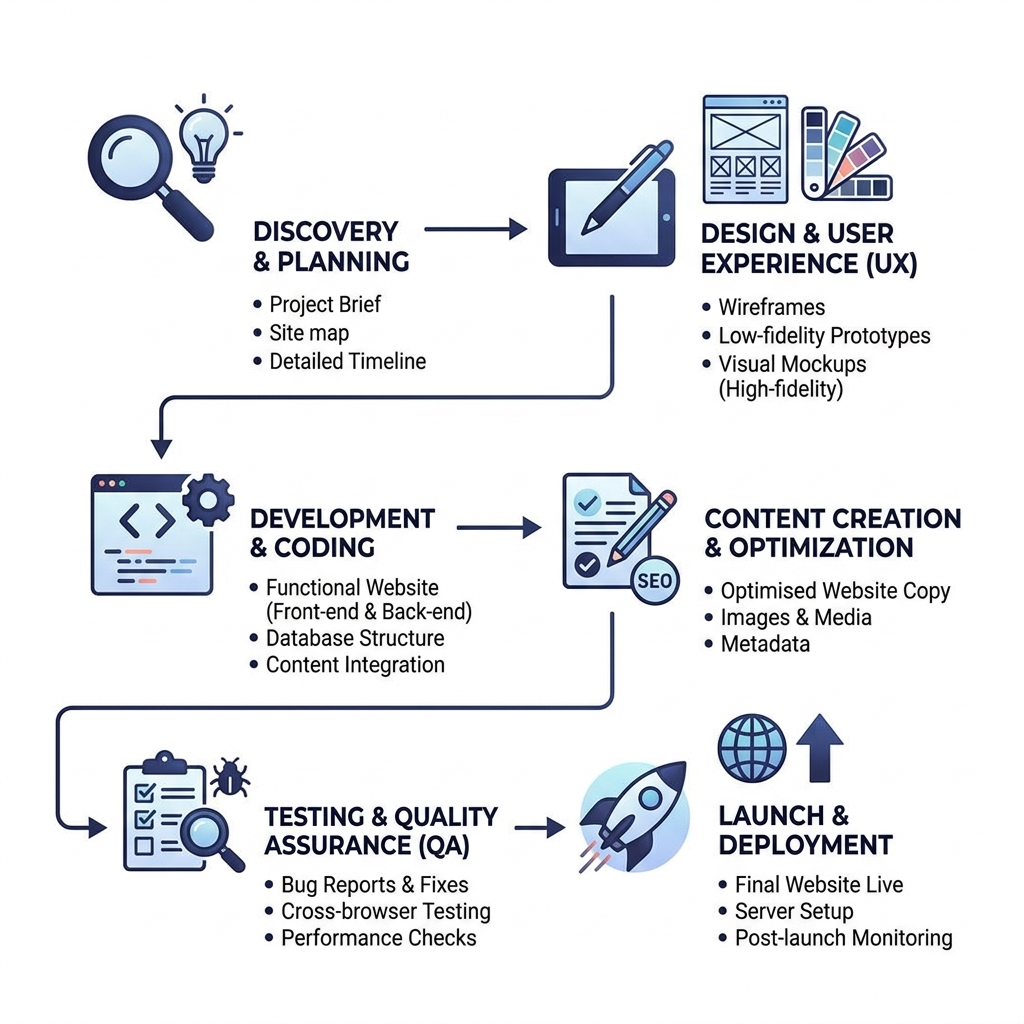
- Discovery & Strategy: 2-4 weeks
- Design/Wireframing: 3-6 weeks
- Development: 6-12 weeks
- Testing & QA: 2-3 weeks Timelines vary based on how quickly you (the client) can provide feedback and content.
Why is ongoing support and security necessary?
The internet is not a “set it and forget it” medium. Browsers update, plugins evolve, and security threats change daily. Ongoing support ensures your site doesn’t “break” when Chrome releases a new update and keeps your customer data safe from vulnerabilities.
Conclusion
Finding the right web development agency is the cornerstone of your digital strategy. Whether you are a startup in Bethlehem, PA, or a growing enterprise, your website is your most important employee—it works 24/7 to tell your story and capture leads.
At Herow Marketing, we believe in a “strategy-first” approach. We don’t just build websites; we build growth engines. Our time-tested strategic playbook ensures that every pixel serves a purpose, and our full transparency via monthly data reports means you always know exactly how your investment is performing. We focus on measurable growth, combining high-end web development with branding, SEO, and media production to ensure your business doesn’t just exist online—it dominates.
Ready to transform your digital presence? Start your project with a professional web development agency and let’s build something that drives real results.