

10 Essential Skills to Become a Media Production Company
What a Media Production Company Actually Does (And Why It Matters)
A media production company is a business that creates content across film, TV, music, advertising, podcasts, and more — handling everything from the first creative idea to the final delivered product.
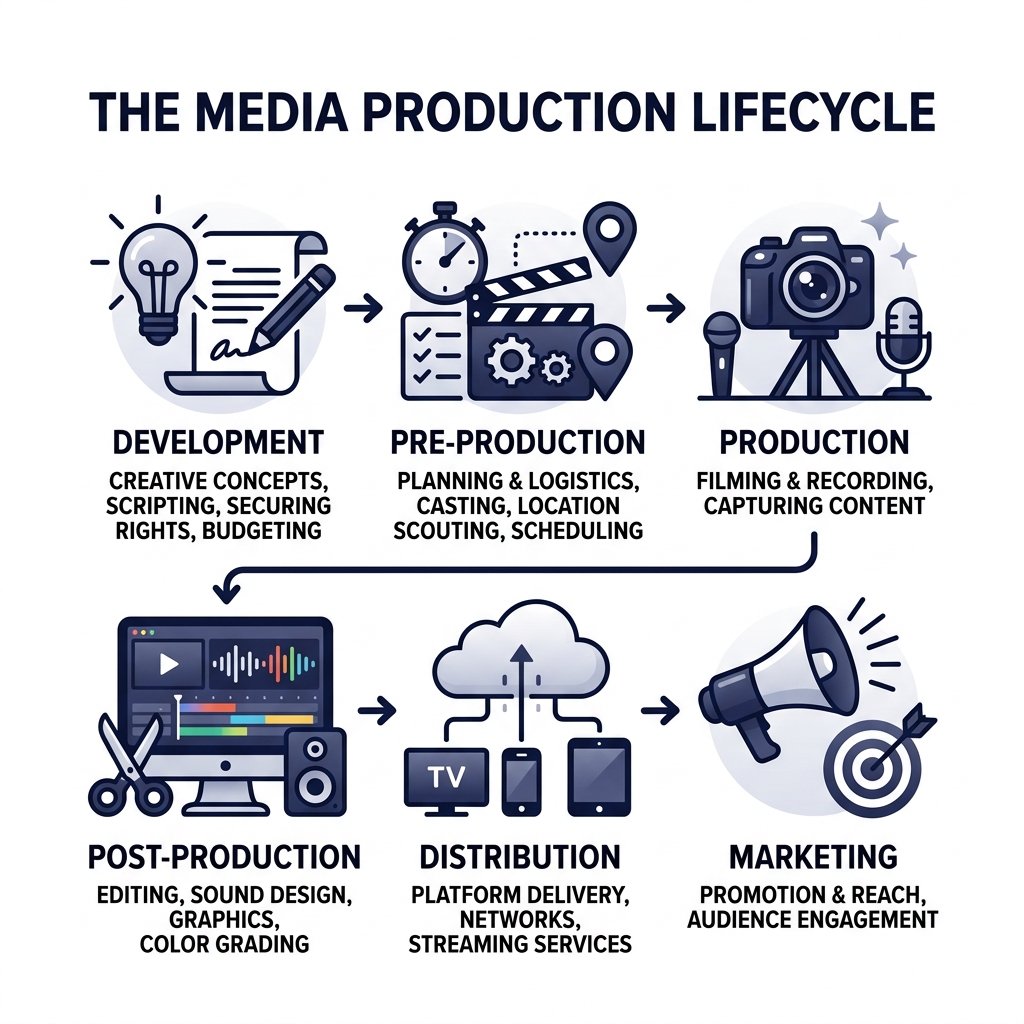
Here’s a quick breakdown of what they typically do:
| Function | What It Means |
|---|---|
| Development | Finding and shaping ideas, securing rights, budgeting |
| Pre-Production | Scripting, casting, location scouting, scheduling |
| Production | Filming, recording, or capturing the content |
| Post-Production | Editing, sound, graphics, color grading |
| Distribution | Getting content to platforms, networks, or audiences |
| Marketing | Promoting the finished work for maximum reach |
They work across industries — from major streaming platforms like Netflix and HBO to small businesses, nonprofits, music artists, and brands.
Whether a company produces a documentary that premieres at SXSW or a 60-second product video for an e-commerce brand, the core skills are the same: storytelling, technical execution, and strategic delivery.
I’m Gianna Heron — with a background spanning professional performance, creative direction, and Wall Street finance, I’ve seen how powerful visual storytelling is when it’s paired with real business strategy. That experience is exactly what informs how I approach media production company work at Herow Marketing.
Master Project Development and Creative Vision
To succeed as a media production company, the first and perhaps most vital skill is the ability to shepherd a project from a mere “what if” to a tangible reality. This is the development phase, and it is where the heavy lifting of fundraising, budgeting, and creative shaping happens. Without a strong vision and the financial roadmap to back it up, even the most brilliant ideas never leave the ground.
Fundraising is an art form in itself. Production companies often rely on project-based investments rather than steady, predictable revenue streams. This means we are constantly pitching, securing grants, or entering into co-production agreements. Budgeting follows closely behind; a production company must be able to forecast costs accurately—from craft services to high-end visual effects—to ensure the project remains viable.
We see the impact of master-level development in high-profile projects that capture the cultural zeitgeist. For instance, the Noah Kahan Netflix Documentary which premiered at SXSW, isn’t just a film about music; it’s a deep dive into mental health, depression, and body dysmorphia. Developing a project with that much emotional weight requires a production team that understands how to balance sensitivity with cinematic appeal.
Similarly, projects like Questlove’s Earth, Wind & Fire Project landing at HBO demonstrate how a production company can take a legendary musical legacy and turn it into a must-watch television event. These projects succeed because the production companies involved managed the entire project lifecycle—from securing the rights to the music to finding the right distribution partner—to ensure maximum cultural impact.
Essential Services of a Media Production Company
While the “big picture” vision is essential, a media production company must also be a master of the day-to-day services that make content possible. This involves three core phases:
- Pre-production: This is the planning stage. We handle scriptwriting, storyboarding, casting, and location scouting. It’s where we build the blueprint for the entire shoot.
- Principal Photography: This is the “action” phase. It involves the actual capturing of video-photography assets. Whether it’s a 15-camera live stream for a major concert or a single-camera interview for a local Bethlehem business, this phase requires intense coordination.
- Post-production: Once the cameras stop rolling, the work moves to the editing suite. This is where media-production truly comes together through color grading, sound design, and motion graphics.
Navigating the Business of a Media Production Company
Running a media production company isn’t just about being creative; it’s about navigating a complex web of legal deals and staffing requirements. In the industry, we often talk about “overall deals” and “first-look deals.”
An overall deal is essentially a “pay-for-play” arrangement where a studio or network pays a production company a set fee to develop projects exclusively for them. On the other hand, a first-look deal gives a distributor the right to be the first to see (and potentially buy) a project before it goes to the open market. However, the industry is changing. There has been a notable shift in TV deals, with many major networks moving away from expensive overall deals in favor of more flexible, project-based arrangements.
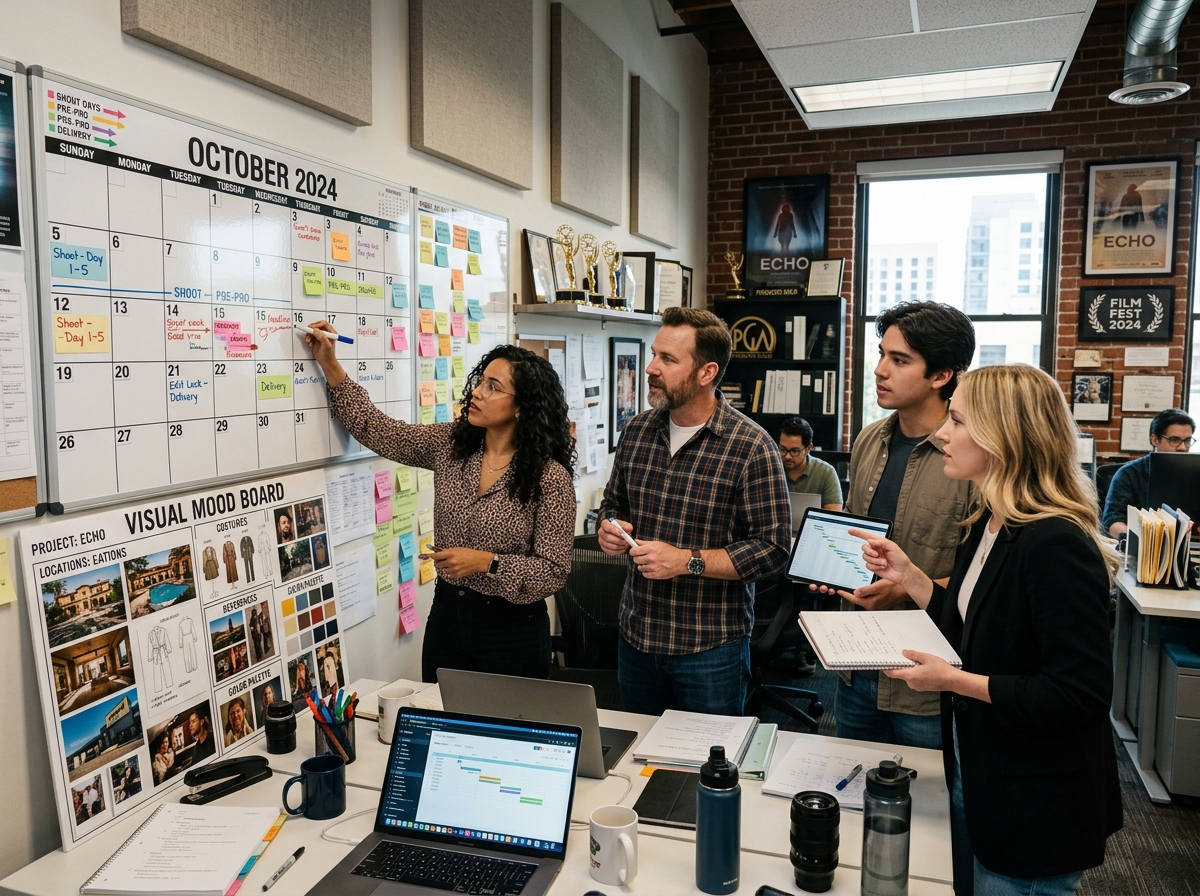
Staffing is another hurdle. Most production companies operate with a small core team and hire a massive “army” of freelancers for specific projects. If you are working on big-budget projects, you often need to be a guild signatory. This means agreeing to follow the rules and pay scales of unions like IATSE, the DGA, or SAG-AFTRA. This allows access to the top-tier professional crew members necessary for broadcast-quality work.
Technical Proficiency and Resource Management
You can’t call yourself a media production company if you don’t understand the gear. While you don’t necessarily need to own every piece of equipment, you must know how to manage it. Many companies choose equipment leasing for high-end items like RED or ARRI cameras and drones to keep overhead low while maintaining access to the latest technology.
Technical proficiency also extends to studio-lighting. Understanding how to manipulate light is what separates an amateur video from a cinematic experience. This technical expertise was on full display in the John Prine Documentary, which provided a cinematic send-off for the folk legend. The lighting and camera work had to match the soulful, intimate nature of Prine’s music, proving that technical choices are always creative choices.
To understand how different companies handle these resources, look at the structural differences between major and independent firms:
| Feature | Major Studio Production | Independent Production Company |
|---|---|---|
| Funding | Corporate-backed, deep pockets | Private investors, grants, pre-sales |
| Equipment | Often owned in-house or long-term leases | Primarily project-based rentals |
| Staffing | Large permanent departments | Small core team + large freelance pool |
| Creative Control | Often subject to executive oversight | High degree of creative independence |
| Distribution | Built-in network/platform access | Must pitch and sell to distributors |
Strategic Adaptation and Distribution Skills
The role of the media production company has evolved significantly. We are no longer just “film makers”; we are content strategists. One major trend is the rise of book-to-film units within publishing houses. In 2012, six out of the nine Best Picture Oscar nominees were originally books, highlighting just how much the industry relies on existing intellectual property (IP).
Companies like the Macmillan film division have shown that publishers can bolster their bottom line by retaining film rights and producing their own adaptations. As a production company, you must understand how to secure these rights and navigate distribution networks to ensure the content finds an audience.
Marketing is the final piece of the puzzle. It isn’t enough to make a great film; you have to get people to watch it. This involves everything from social media teasers to high-profile festival premieres.
Evaluating a Top-Tier Media Production Company
If you are looking to hire a media production company, how do you know who is actually good? We recommend looking at Clutch rankings and verified client feedback. Top-tier firms consistently show strengths in three areas:
- Project Management: Do they hit their milestones? Top firms often have 100% positive ratings for staying organized.
- Budget Adherence: 90% of top-rated firms on Clutch are praised for delivering on-budget.
- Communication Skills: Does the team respond quickly? Leading firms are often marked as “very responsive.”
For example, some top video firms have reported that their content outperformed a client’s previous engagement metrics by over 1,200%. That is the kind of ROI a professional production partner should deliver.
Frequently Asked Questions about Media Production
What is the difference between an overall deal and a first-look deal?
An overall deal is a comprehensive agreement where a production company is paid a salary-like fee to develop all their projects exclusively for one studio. A first-look deal is less restrictive; the studio gets the right of first refusal on a project, but if they pass, the production company can sell it elsewhere.
How do production companies measure project ROI?
We look at performance metrics like views, completion rates, and conversion data. For branded content, we measure how the video impacted sales or brand awareness. For independent films, ROI is often measured through distribution sales, box office, or streaming licensing fees.
Why are book-to-film adaptations so prevalent in the industry?
Books provide a “proven” story with an existing fanbase, which reduces the financial risk for production companies. It is often easier to fund a project based on a bestselling novel than an original screenplay.
Conclusion
At Herow Marketing, we believe that a media production company should do more than just deliver a file; we deliver growth. Based in Bethlehem, PA, we combine creative excellence with a time-tested strategic playbook. We don’t just guess what will work; we use full transparency and monthly data reports to show you exactly how your content is performing.
Whether you need high-end video-photography for a brand campaign or strategic media-production to tell your story, we are here to drive measurable results.
Ready to see how professional storytelling can transform your business? More info about our services is just a click away. Let’s make something unforgettable together.