

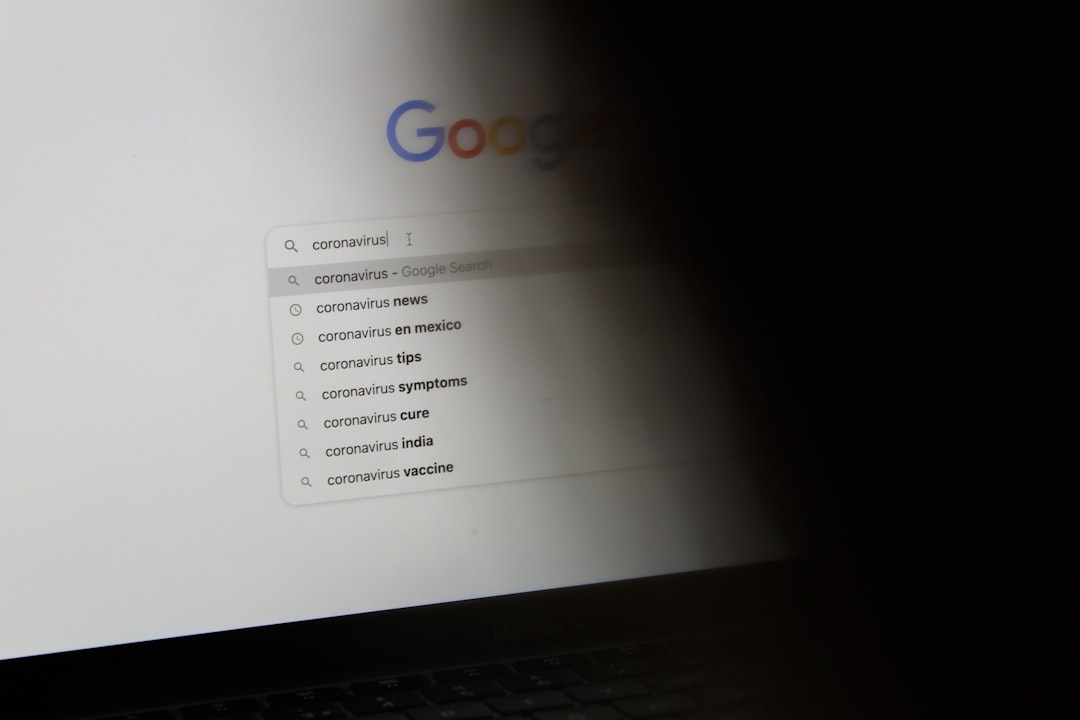
The Ultimate Guide to Owning Your Google Search Results
The Ultimate Guide to Owning Your Google Search Results
Your Google Search Results Are Your First Impression — Here’s How to Control Them
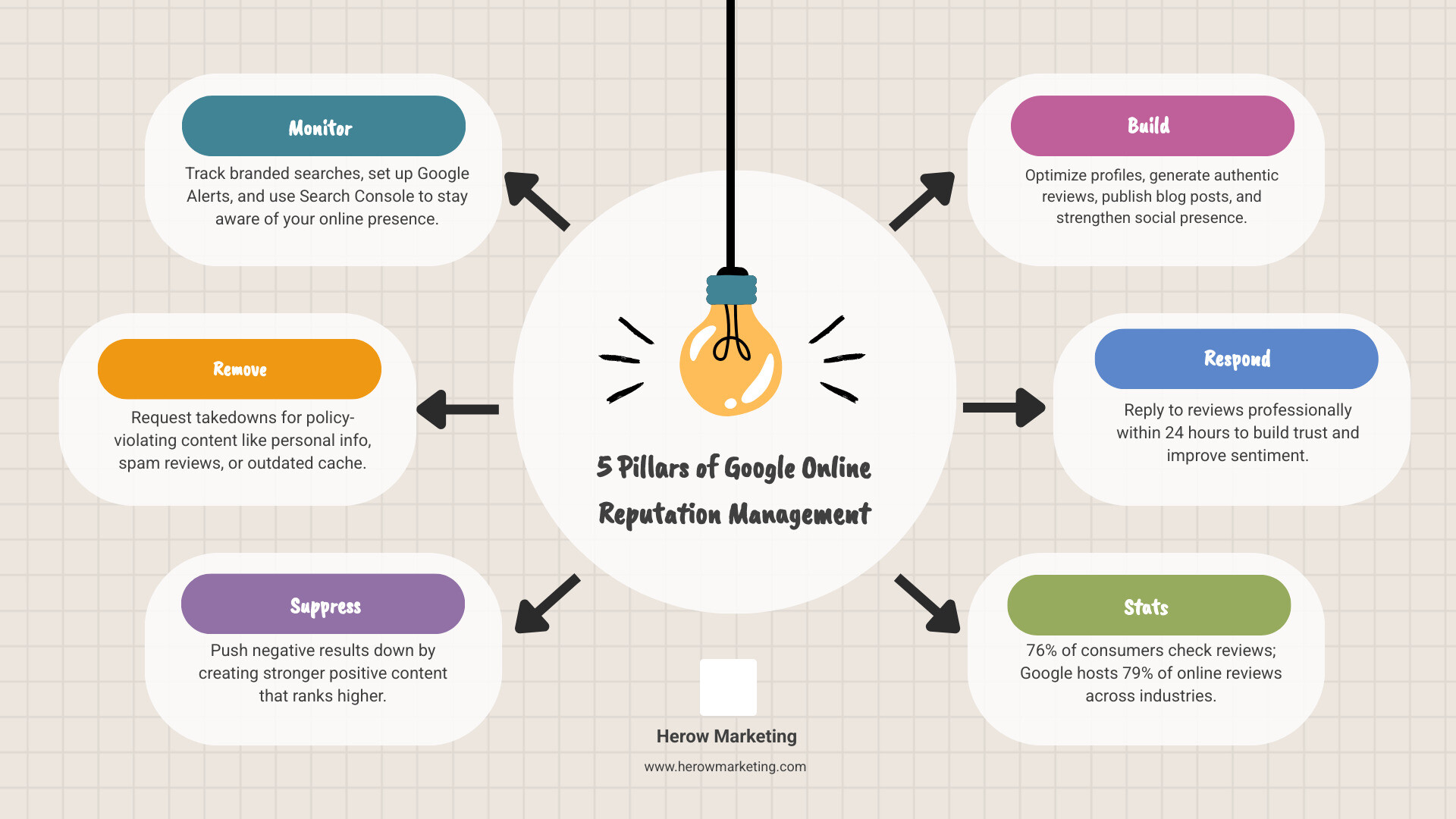
Google online reputation management is the practice of monitoring, shaping, and improving what appears when someone searches your name or business on Google.
Here’s a quick breakdown of what it involves:
| What It Covers | Examples |
|---|---|
| Monitor | Google Alerts, Search Console, manual branded searches |
| Remove | Policy-violating reviews, personal info, outdated cache |
| Suppress | Push down negatives with stronger positive content |
| Build | Optimized profiles, reviews, blog posts, social presence |
| Respond | Reply to reviews professionally and promptly |
Think about this: around 76% of consumers rely on online reviews when researching a business. And Google dominates the review landscape — accounting for 79% of all online reviews across industries.
That means before a potential customer ever calls you, visits your website, or walks through your door — they’ve already formed an opinion based on what Google showed them.
A single negative review, an outdated profile, or a damaging article sitting at the top of your search results can quietly cost you leads, clients, and revenue every single day — without you even knowing it.
The good news? You have more control over this than you think.
I’m Gianna Heron, founder of Herow Marketing — and my background in brand strategy, creative direction, and business growth is exactly what informs my approach to Google online reputation management for small businesses. Throughout this guide, I’ll walk you through everything you need to audit, fix, and build a search presence you’re proud of.
Simple google online reputation management word guide:
What Google Online Reputation Management Really Means
In May 2026, the digital landscape is more crowded than ever. When we talk about google online reputation management (ORM), we aren’t just talking about deleting a bad comment. We are talking about Search Engine Reputation Management (SERM)—a sophisticated blend of SEO, content marketing, and public relations designed to ensure that when someone types your name into that search bar, they see exactly what you want them to see.
Your reputation is formed by several moving parts: branded queries (searches for your specific name), news mentions, social media profiles, and the “Local Pack” (those map results that show up for local businesses). It’s the collective sentiment of your owned media (your website), earned media (press and reviews), and social signals.
Why google online reputation management matters for businesses and individuals
Whether you are a local business in Bethlehem, PA, or an individual professional, your Google results act as a 24/7 resume. About 76% of consumers rely on online reviews during their research process. If you’re a physician, a lawyer, or a contractor, a single “abusive” or “scam” keyword appearing in your results can halt a lead in its tracks.
For individuals, hiring decisions are often made after a quick Google search. For businesses, your star rating is a primary trust signal. Google captured 97% of retail reviews and 94% of healthcare reviews last year—ignoring this isn’t just a missed opportunity; it’s a massive reputation risk.
How Google forms a reputation in search results
Google’s algorithm doesn’t “know” you personally; it evaluates data based on Search Essentials (formerly Webmaster Guidelines). It looks for:
- Relevance: How well does the content match the searcher’s intent?
- Authority: Is the information coming from a trusted source?
- Freshness: Is the content recent?
- Engagement: Do people click on and stay on these pages?
Google also uses “entity understanding” to connect your name to your business, your social profiles, and your reviews. If these signals are inconsistent or negative, your search reputation suffers.
The assets you can control vs. the ones you can only influence
Effective google online reputation management requires knowing where to spend your energy.
- Total Control: Your website, your blog, and your Google Business Profile (GBP).
- High Influence: Your social media profiles (LinkedIn, X, Facebook) and directory listings.
- Low Influence: Third-party news articles, forum posts (like Reddit), and independent review sites.

Audit Your Reputation on Google Search
Before you can fix the problem, you need to see what the world sees. We recommend performing a comprehensive search audit at least once a quarter.
Run a complete google online reputation management audit
Don’t just search your business name once and call it a day. You need to search:
- Your Brand/Personal Name: Use variations and common misspellings.
- Executive Names: People often search for the owner or CEO.
- Product/Service Terms: “Best [Service] in Bethlehem” or “[Product] reviews.”
- Negative Modifiers: Search your name plus words like “scam,” “reviews,” or “complaints.”
Pro Tip: Always use an Incognito or Private browsing window. This prevents your personal search history from biasing the results, giving you a “clean” look at what a stranger would see.
Score what you find and prioritize high-risk results
Not all negative results are created equal. A negative comment on page 5 of Google is a low priority. A 1-star review that shows up in the “Local Pack” or a negative news story in the top 3 results is a “Crisis Trigger.”
Evaluate results based on Domain Authority (how powerful the site is) and Click Likelihood. High-authority sites like Yelp or major news outlets are harder to move, meaning they require more aggressive suppression strategies.
Free Google tools for monitoring reputation over time
You don’t need a five-figure software suite to start. Google provides excellent free tools:
- Google Alerts: Set these up for your name and business. We suggest using quotes (e.g., “Herow Marketing”) to get exact matches.
- Google Search Console: This helps you see which queries bring users to your site and alerts you to technical issues that could hurt your rankings.
- Google Account Help: Use this to manage what personal info is visible across Google services.
Remove, Report, or Suppress Negative Results the Right Way
When you find something negative, your first instinct might be to panic. Take a breath. There are three main paths: removal, reporting, or suppression.
Legitimate ways to remove harmful content from Google
Google is not a “delete button” for the internet, but they will remove content that violates their policies. This includes:
- Personal Information: Doxxing, bank account numbers, or non-consensual explicit imagery.
- Legal Removals: Content that violates copyright (DMCA) or court-ordered defamation removals.
- Outdated Cache: If a site has deleted a page but it still shows in search snippets, you can request a cache refresh.
How to handle negative Google reviews without making things worse
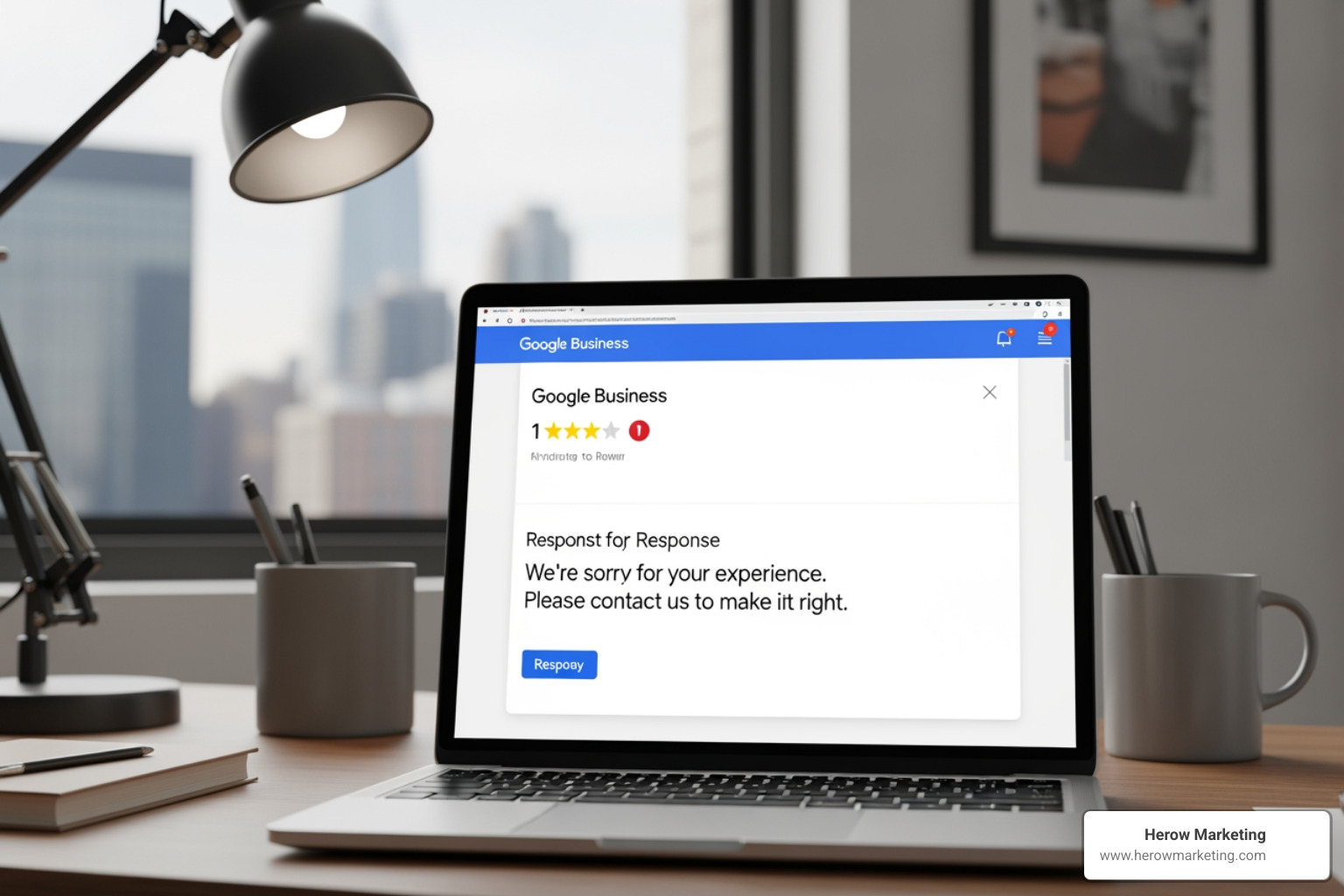
Reviews are the heartbeat of google online reputation management. When a 1-star review hits:
- Don’t get emotional: Arguing publicly makes you look unprofessional.
- Respond promptly: Aim for a 24-hour window.
- Take it offline: “We’re sorry you had this experience. Please contact us at [phone/email] so we can make it right.”
- Flag fakes: If a review is clearly from a troll or a competitor, flag it for “Conflict of Interest” or “Spam” using Google’s reporting tools.
The risks of shady ORM and offshore 1-star removal services
You will see ads promising “Guaranteed 1-Star Review Removal.” Beware. Many of these offshore agencies use bot networks or “ransomware” tactics—removing one review only to have three more appear. Using these services can lead to your entire Google Business Profile being suspended. Stick to ethical, policy-based strategies.
Build Positive Visibility That Outranks the Negative
If you can’t get a result removed, you must outrank it. This is called suppression.
SEO strategies that help google online reputation management campaigns win
To “drown out” the bad, you need to flood the search results with the good. We use owned content as our primary weapon.
- Branded Pages: Create “About,” “Bio,” and “FAQ” pages optimized for your name.
- Schema Markup: Use “Organization” or “Person” schema to help Google understand who you are.
- Entity SEO: Link your website to your social profiles to create a “knowledge graph” that Google trusts.
How to drown out negative results with stronger positive assets
Build a “firewall” of positive content. This includes:
- High-Authority Social Profiles: LinkedIn, X, and Instagram usually rank on page one.
- Guest Features: Getting featured on local Bethlehem news sites or industry blogs.
- Multimedia: Videos and images often get their own dedicated real estate in Google Search. Optimize your YouTube video titles and image Alt-text with your brand name.
Google Business Profile, NAP consistency, and local reputation protection
Your Google Business Profile (GBP) is often the first thing people see. Ensure your NAP (Name, Address, Phone) data is identical across the web. Inconsistent data confuses Google and lowers your ranking. Keep your profile active by posting photos, updates, and answering FAQs.
How Google reviews affect local SEO rankings and visibility
Last year, the average business received 66 new Google reviews. These aren’t just for show; they are a major ranking signal.
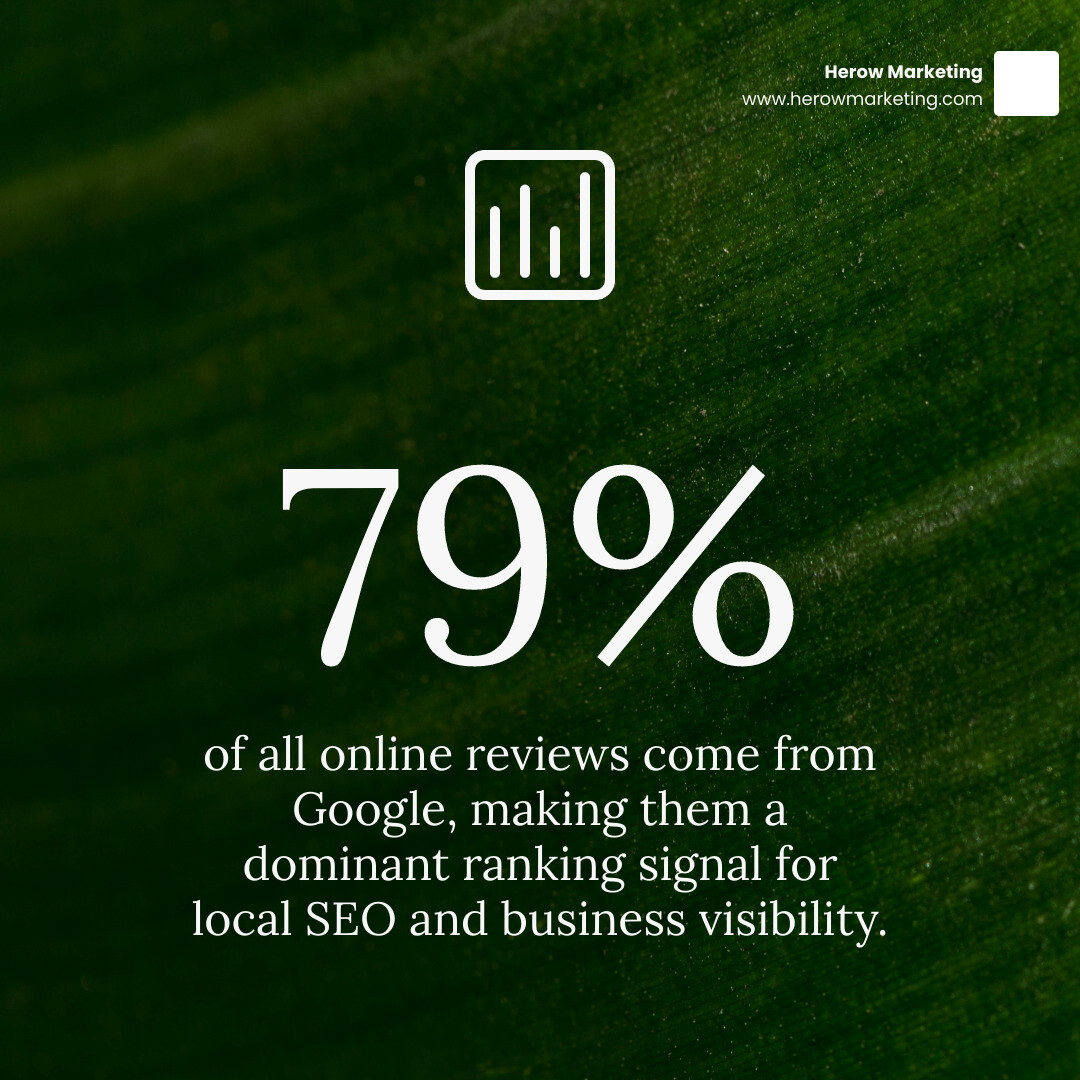
Google looks at review volume, recency, and star rating. A steady stream of 5-star reviews tells Google you are a relevant, trusted business in the Bethlehem area.
Earn Better Reviews Ethically and Respond Like a Pro
The best defense is a good offense. You need a system to collect authentic feedback.
How to encourage authentic positive reviews without violating policy
Never offer discounts or gifts in exchange for reviews—it’s against Google’s Terms of Service and can get you banned. Instead:
- Ask at the “Peak” moment: Ask for the review immediately after a successful sale or service.
- Make it easy: Use QR codes on-site or send a direct link via SMS or email.
- Train your staff: A personal ask from a team member is much more effective than an automated email.
A simple framework for responding to negative, neutral, and positive reviews
- Positive: “Thanks, [Name]! We loved working with you on [Project].” (This helps with keyword density!)
- Neutral: “Thank you for the feedback. We’re glad you liked [X], and we’re working on [Y] to improve.”
- Negative: “We take this seriously. We’d like to learn more to resolve this. Please reach out to us.”
Common mistakes that stall reputation improvement
The biggest mistake? Abandoning your profiles. If you haven’t posted on your LinkedIn or Google Business Profile in two years, it looks like you’re out of business. Other pitfalls include keyword stuffing your responses or ignoring “complaint sites” like Ripoff Report until it’s too late.
Timeline, Metrics, and When to Get Professional Help
Managing your reputation is a marathon, not a sprint.
How long google online reputation management usually takes
- Quick Wins (1-4 weeks): Updating social profiles, responding to existing reviews.
- Noticeable Shifts (3-6 months): Pushing a negative result to the second page, building a higher star rating.
- Full Dominance (6-12 months): Owning nearly all top 10 results for your branded search.
KPIs that show whether your reputation is improving
We track growth through monthly data reports. Look for:
- Average Star Rating: Is it moving toward 4.5+?
- Branded Rankings: Do you own the top 5 results?
- Local Actions: Are more people clicking “Call” or “Directions” from your Google profile?
- Sentiment Trends: Is the “snippet” text in search results becoming more positive?
When hiring a specialist makes sense
If you are facing a PR crisis, persistent negative press, or legal issues, it’s time to bring in the pros. At Herow Marketing, we provide affordable reputation management that focuses on transparency and measurable growth. We don’t use “black hat” tricks; we use a strategic playbook to build a brand that can weather any storm.
Frequently Asked Questions About Google Online Reputation Management
Can you delete any negative result from Google?
No. Google only removes content that violates specific policies (like private info or harassment). Most other negative content must be suppressed by outranking it with better, more relevant content.
What should I do first if I find bad search results about me or my business?
First, audit the results to see how many people are actually seeing them. Second, claim all your social and business profiles. Third, start a “review generation” campaign to bring in fresh, positive feedback.
Is reputation management ethical?
Absolutely, provided it focuses on highlighting the truth, correcting inaccuracies, and encouraging authentic customer feedback. It’s about ensuring the search results reflect the full picture of who you are, not just one bad day.
Conclusion
Your digital presence in 2026 is your most valuable asset. Whether you’re a business owner in Bethlehem or a professional looking to protect your name, google online reputation management is no longer optional—it’s essential.
By auditing your search results, responding to feedback with grace, and consistently publishing high-quality content, you can take the wheel and drive your own narrative. Don’t let a single negative link define your hard work.
Ready to see how your brand stacks up? Learn more about our services and let’s start building a search presence that truly represents you.