

An Essential Guide to Comparing Social Media Management Tools
An Essential Guide to Comparing Social Media Management Tools
Social Media Management: The Quick Answer
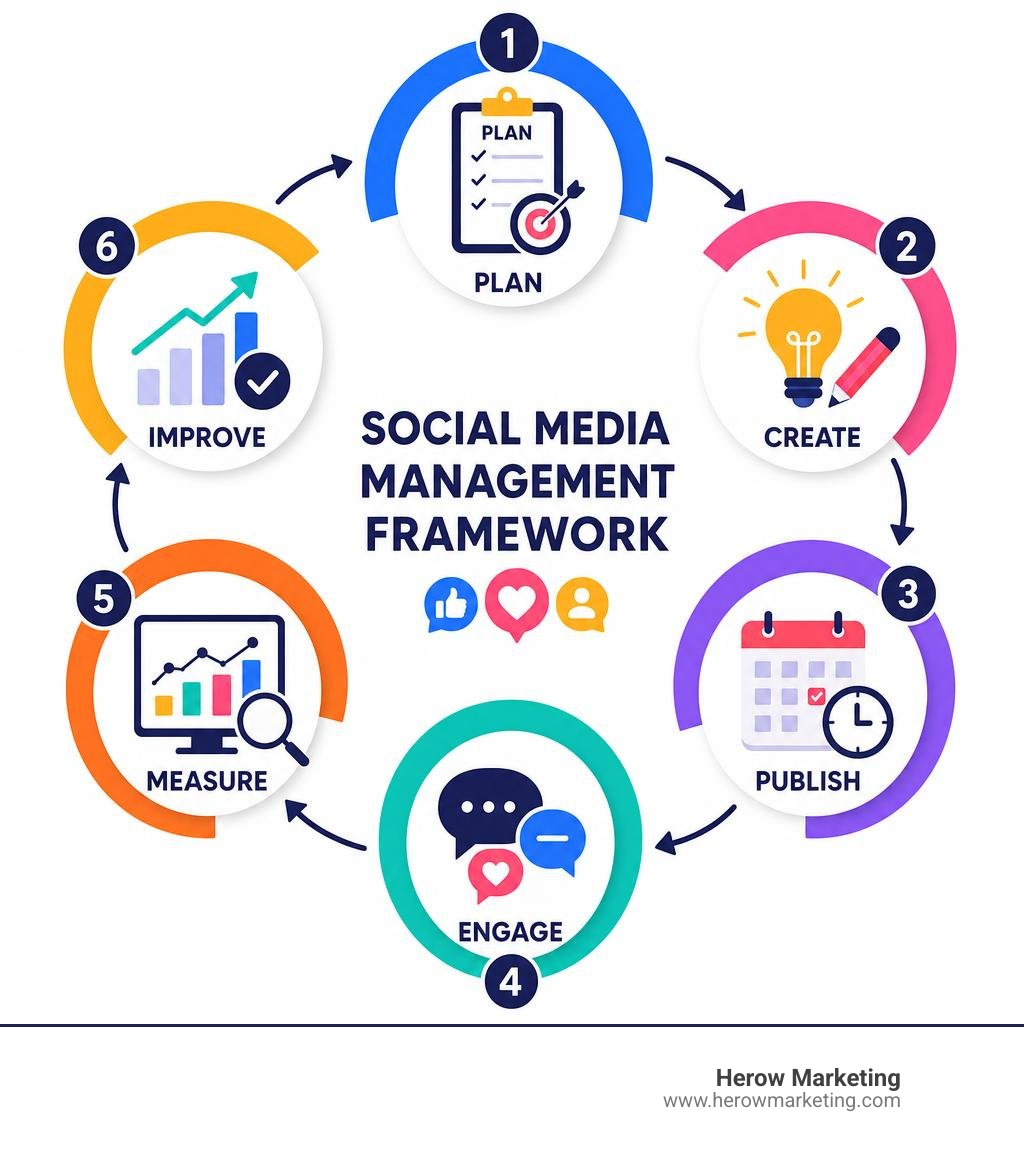
Social media management is the planning, creation, publishing, monitoring, and measurement of content across social platforms to support business goals. It helps businesses maintain a clear brand voice, engage customers, build visibility, and turn social activity into traffic, leads, and sales.
For a small business, effective management means more than posting when time allows. It requires a repeatable system for:
- Creating useful, on-brand content
- Scheduling posts across the right channels
- Responding to comments and messages
- Tracking engagement, reach, website actions, and conversions
- Using results to improve the next month of content
The right tools can make that system far easier to run. But features, pricing models, reporting depth, inbox tools, and platform limits vary widely, so the best choice depends on your goals, team size, and budget.
I’m Gianna Heron, founder of Herow Marketing, with a background in creative direction, brand positioning, business finance, and digital strategy. I use social media management to connect strong visual storytelling with practical, data-informed growth for businesses.
Basic social media management glossary:
What is Social Media Management and Why Is It Critical in 2026?
At its core, social media management is the operational backbone of a company’s online marketing presence. In 2026, social channels are no longer just places to drop occasional product updates or post funny memes—they are primary customer service desks, community hubs, discovery engines, and direct sales channels.
The economic scale of this discipline reflects its central role in modern business strategy. The global market for social media management was valued at $32.48 billion in 2025 and is projected to climb dramatically to $164.52 billion by 2030. Companies of every size are pouring resources into software and strategy because modern buyers research products on social networks long before visiting a traditional website.
To stand out in today’s noisy feed, businesses must build an intentional presence using proven frameworks like the EPIC framework (Empower, Provide value, Inspire, and Connect). Establishing a clear brand voice and tone ensures that every post, reply, and caption reinforces who you are as a brand. If you want to dive deeper into broader social campaigns, check out A Comprehensive Guide to Social Media Marketing to understand how organic posting interacts with broader campaign goals.
When executed correctly, structured social media management builds true audience engagement, sparks brand awareness, and delivers measurable business growth. To see how top industry leaders craft their presence, you can Steal Their Strategy: The Best Brands on Social Media.
Key Responsibilities of a Social Media Manager
A dedicated social media manager wears many hats, balancing visual creativity with precise analytical thinking. Their core responsibilities span four main pillars:
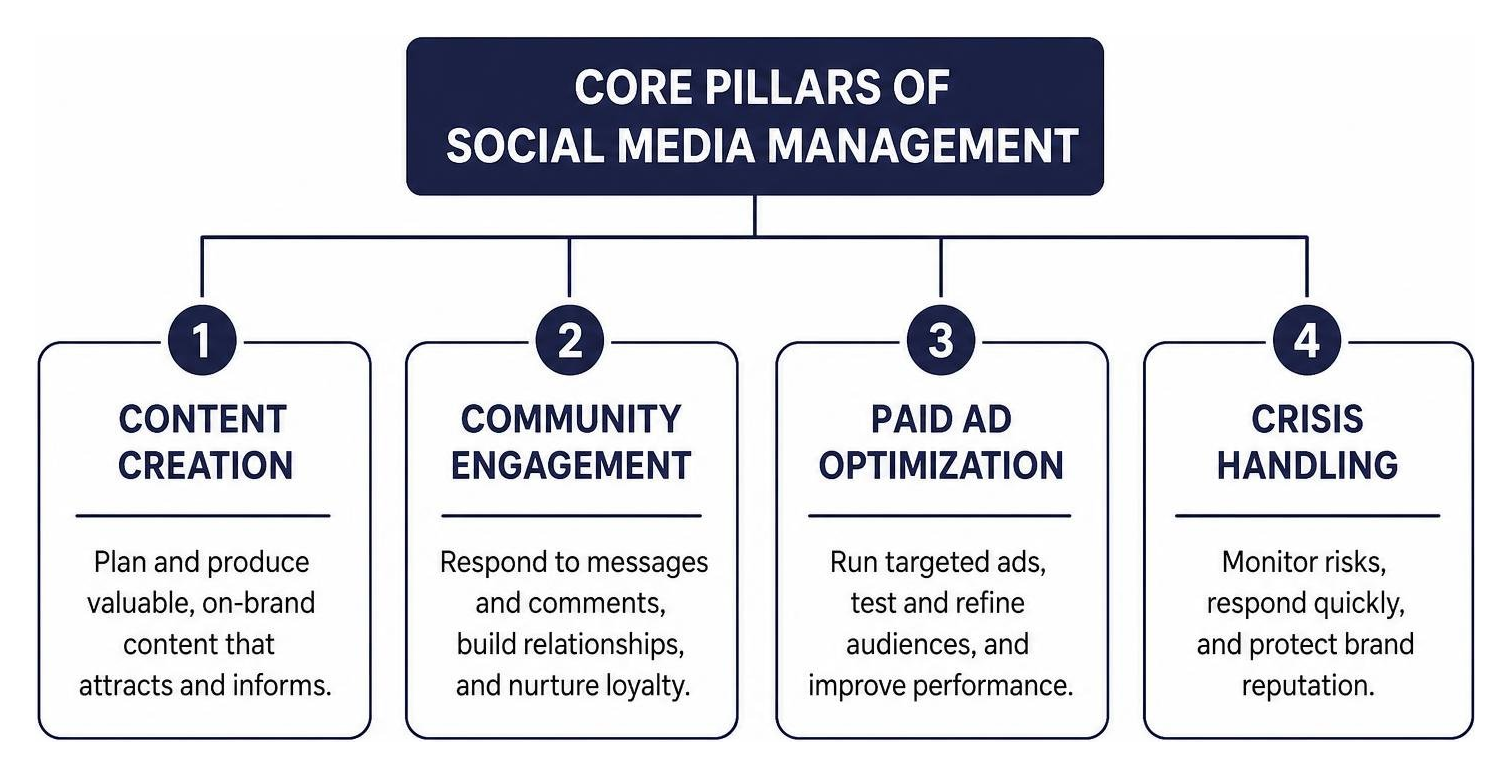
- Content Creation and Curation: Designing graphics, writing compelling copy, producing short-form videos, and assembling balanced content calendars that resonate with target buyer personas.
- Community Moderation: Actively monitoring incoming messages, post comments, and brand mentions across platforms to build genuine relationships and protect brand reputation.
- Paid Ad Campaign Optimization: Managing promotional budgets, running A/B target tests, and refining audience segments. For a detailed breakdown on maximizing paid performance, take a look at our guide on How to Manage Facebook Ads Like a Pro.
- Crisis Management Protocols: Establishing clear response guidelines and escalation procedures when negative feedback or public PR challenges arise. Knowing How to Handle a Social Media Crisis Without Crying is an essential safety net for any scaling brand.
Key Features to Evaluate When Comparing Platforms
Selecting the ideal software stack for social media management requires a careful look at how your team operates day-to-day. Choosing a tool simply because it is well-known can lead to overpaying for unused enterprise features or struggling with missing channel integrations.

When evaluating tools, pay close attention to scheduling automation, social listening capabilities, unified social inboxes, and multi-network publishing options. Furthermore, pay attention to platform API constraints. Recent changes across network APIs—most notably X’s paid developer tiers—have altered what third-party tools can offer. Capabilities like automated direct messaging, deep competitor tracking, and third-party comment moderation are heavily governed by what individual social networks permit outside developers to access.
Essential Social Media Management Tools and Features
Modern management software centralizes multi-channel operations into a single operational interface. To explore detailed dashboard software options, review our roundup of One Dashboard to Rule Them All: Top Social Media Tools.
When reviewing your software options in 2026, keep an eye out for these essential capabilities:
- Automated Publishing & Content Batching: Draft, preview, and queue content weeks in advance across visual and text-centric networks.
- Unified Inbox & Community Moderation: Manage organic and paid post replies, private DMs, and brand mentions from a single centralized inbox to streamline response times.
- Cross-Platform Analytics & Reporting: Trace post reach, click-through rates, and conversion actions across platforms without relying exclusively on native native insights split across five apps.
- Model Context Protocol (MCP) & AI Integration: Modern software allows teams to query performance metrics, generate context-aware post variations, and analyze audience sentiment using advanced AI assistants natively within their workflow interface.
The landscape of tools ranges widely in focus and pricing structure. For simple scheduling across channels, tools like Buffer Essentials offer per-channel entry pricing starting as low as $6/month per social channel. On the other end of the spectrum, robust enterprise suites like Hootsuite Standard start at $99/user/month (billed annually), while Sprout Social spans from $2,400 to over $6,000+ per user per year for deep enterprise social listening and asset management. Mid-tier platforms like Vista Social ($79/month for 3 users and 15 accounts) or Metricool ($25/month for managing 5 brands) offer balanced, cost-effective alternatives for growing businesses.
Here is a practical breakdown comparing common software licensing structures:
| Pricing Model Structure | Best Suited For | Key Advantages | Potential Drawbacks | Typical Price Range |
|---|---|---|---|---|
| Per-Channel Pricing (e.g., Buffer) | Solopreneurs, micro-businesses | Pay only for active profiles; highly flexible scaling | Costs rise quickly if managing multiple accounts per brand | $6 – $12 per channel/mo |
| Per-User Licensing (e.g., Hootsuite, Sprout Social) | Enterprise teams, agencies | Unlimited profiles; robust user permission security controls | Expensive to add extra team members or internal collaborators | $99 – $500+ per user/mo |
| Flat-Rate / Brand Bundles (e.g., Vista Social, Metricool) | Small marketing teams, growing brands | Cost-effective for multi-account management; predictable bills | May limit advanced listening metrics or white-label reporting | $25 – $150 total/mo |
Pricing Structures and Budget Considerations
Determining your business’s software budget requires aligning software costs with campaign operational requirements. When evaluating options, look closely at hidden add-on costs such as extra user seats, historical data exports, premium social listening feeds, and advanced API access fees.
For a complete breakdown on total investment expectations across full-service management and software stacks, visit our full Harga Social Media Management Guide 2026.
Building an Effective Strategy, Content Calendar, and Analytics Framework
A tool is only as strong as the strategy behind it. Successful social media management relies on a clear, repeatable process that moves from ideation to strategic execution and performance review.
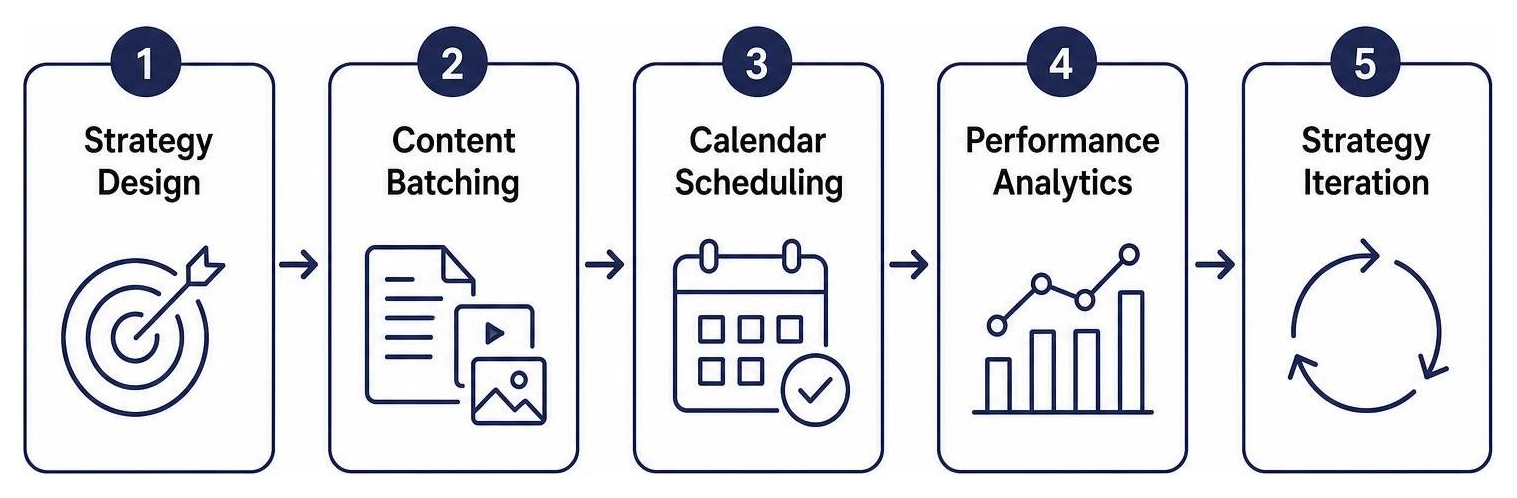
- Define Your Strategic Objectives & Brand Tone: Outline core business key performance indicators (KPIs), such as brand awareness, referral website traffic, lead capture, or direct social sales. Establish a clear voice that distinguishes your brand from competitors.
- Execute Content Batching & Calendar Scheduling: Group creative tasks together—writing all weekly copy or editing video clips in dedicated sessions. Use digital content calendar software to organize posts by channel, thematic pillar, and optimal post times.
- Monitor Engagement & Moderation: Use unified inbox tools to respond promptly to comments, private messages, and brand mentions, turning casual readers into brand advocates.
- Evaluate KPIs and ROI: Track reach, engagement rate, click-through rate (CTR), cost-per-acquisition (CPA), and conversion metrics monthly to prove tangible marketing return on investment.
- Iterate and Optimize: Refine visual assets, headline angles, and posting schedules based on hard performance data rather than guesswork.

Careers, Skills, and AI Trends in the Industry
As social networks evolve, the demand for skilled marketing professionals who can manage digital channels, interpret campaign data, and lead digital initiatives continues to grow.
Skills and Salary Expectations for Marketers
Employment for advertising, promotions, and marketing managers is projected to grow 6% from 2024 to 2034, faster than the national average for all occupations. Compensation in this sector remains strong. In May 2024, the median annual wage for advertising and promotions managers was $159,660, while marketing managers earned a median annual wage of $161,030.
While senior management roles command high salaries, entry and mid-level positions require a solid blend of technical competencies (analytics, paid ad optimization, SEO) and essential soft skills (adaptability, curiosity, clear communication). Many professionals enter the field with a bachelor’s degree in marketing, digital communications, or business administration.
In addition to traditional degree pathways, recognized online certifications have become standard for developing practical skills. For instance, over 304,265 learners have enrolled in the Meta Social Media Management course on Coursera, which holds a 97% approval rating across 6,020 reviews (with 88.21% giving it 5 stars). Completing this ACE-recommended course can even earn students up to 2 college credits at participating institutions. To explore whether structured online learning fits your path, read our analysis on Why You Should Take the Coursera Social Media Course.
For a comprehensive overview of industry earning potential, review our detailed guide on How Much Do Social Media Marketers Actually Make?. If you are looking to start or advance your digital career in the Lehigh Valley region, check out current local openings via 200 Social Media Marketing Jobs & Work in Bethlehem, PA | Indeed .
Emerging AI Trends in Social Media Management
Generative AI tools have reshaped day-to-day social media management workflows in 2026. Rather than replacing human oversight, modern AI serves as an accelerator for content production and audience insights:
- AI Workflow Integration: Tools automatically reformat long-form content (like webinars or articles) into channel-specific posts, carousel slide decks, and short video scripts.
- Automated Content & Asset Generation: Marketers leverage platform AI tools to quickly generate caption variations, brainstorm visual hooks, and test alternative headlines.
- Predictive Audience Analytics: Machine learning models analyze historical engagement patterns to recommend optimal posting times and forecast target audience sentiment changes.
- Context-Aware Responses: AI assistant suggestions in unified inbox tools help community managers draft personalized, helpful customer service replies in seconds.
- Proactive Trend Discovery: AI algorithms spot rising platform hashtags, audio tracks, and niche conversations, helping brands join cultural discussions early.
Frequently Asked Questions About Social Media Management
What qualifications are required to work in social media management?
While entry requirements vary, most professional roles prefer a bachelor’s degree in marketing, communications, or digital media, backed by practical experience in strategic planning, graphic design, and data analysis. Completing accredited industry certifications (such as platform-specific credentials or Meta certificates) helps validate hands-on expertise in content publishing, campaign optimization, and analytics tracking.
How do API changes impact management software tools?
Social networks continually update their API permissions and pricing models, which directly impacts what third-party social media management software can automate. For example, API restrictions on certain platforms prevent software tools from auto-posting to personal user profiles or accessing deep social listening metrics without specialized, higher-tier API access plans.
What is the average ROI of dedicated management tools?
Dedicated social media management software provides substantial return on investment primarily through time savings, improved community engagement, and data accuracy. By enabling content batching, centralizing customer message management, and delivering consolidated multi-channel reports, tools often save teams 10 to 15 hours per week while preventing missed customer lead inquiries.
Conclusion
Choosing the right social media management software stack and strategic framework is essential for standing out in today’s digital landscape. Whether you are a local business in Bethlehem, PA or a scaling enterprise, success comes down to consistent branding, timely audience moderation, and data-driven iteration.
At Herow Marketing, we believe marketing should be transparent, strategic, and measurable. Our time-tested strategic playbook combines full campaign transparency with detailed monthly data reports, ensuring your social presence delivers real, business-building growth. Ready to upgrade your digital strategy? Elevate Your Digital Strategy with Herow Marketing and let our team help you build a content engine that drives results.