
Why Every Brand Graphic Designer Secretly Wants to Be Your Hero
What Branding & Graphic Design Actually Mean for Your Business
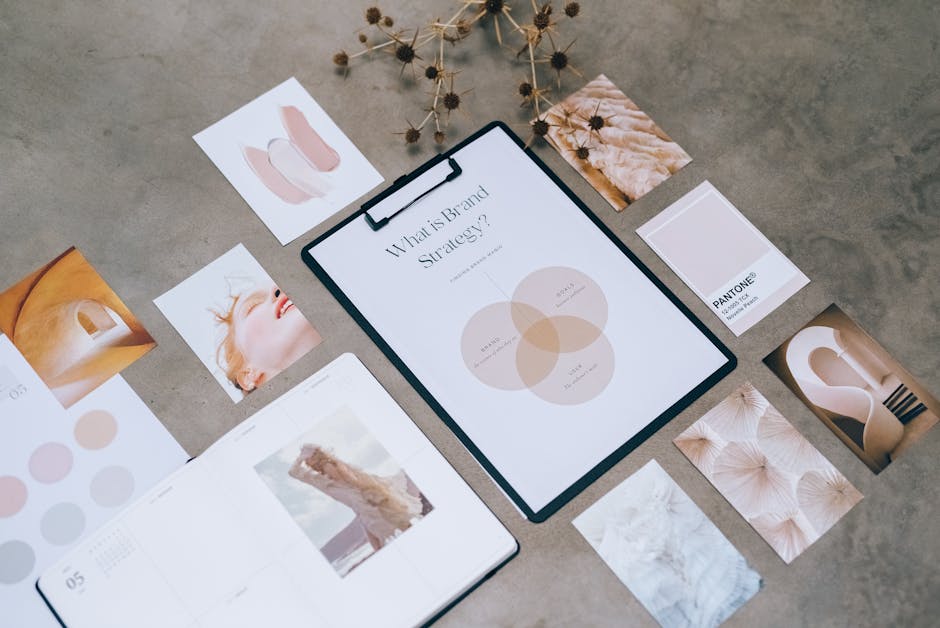
Branding & graphic design work together to shape how the world sees your business — and whether people trust it enough to buy from you.
Here’s a quick breakdown of what each term means:
| Term | What It Is | Example |
|---|---|---|
| Branding | The strategy behind your identity — your values, voice, and positioning | Your mission, tagline, brand personality |
| Graphic Design | The visual tools that bring branding to life | Logo, color palette, typography, social posts |
| Brand Identity | The full system combining both | Everything a customer sees and feels |
Think of branding as why your business exists and what it stands for. Graphic design is how that story gets told visually.
Most small businesses get this backwards — they jump straight to a logo without a strategy behind it. The result? Visuals that look random, messaging that feels off, and customers who don’t remember you.
Strong branding and graphic design do more than look good. Research consistently shows that 95% of purchasing decisions happen subconsciously — meaning your visuals are quietly influencing buyers long before they consciously decide to act.
And with 75% of consumers associating brands with their logos, and 68% of marketers reporting that brand consistency directly drove 10–20%+ revenue growth, this isn’t a “nice to have.” It’s a business lever.
I’m Gianna Heron, founder of Herow Marketing — my background spans professional ballet, creative direction, Wall Street finance, and now strategic marketing, giving me a uniquely cross-disciplinary lens on branding & graphic design that connects visual storytelling directly to business growth. That’s exactly the perspective I’m bringing to this guide.
The Strategic Marriage of Branding & Graphic Design
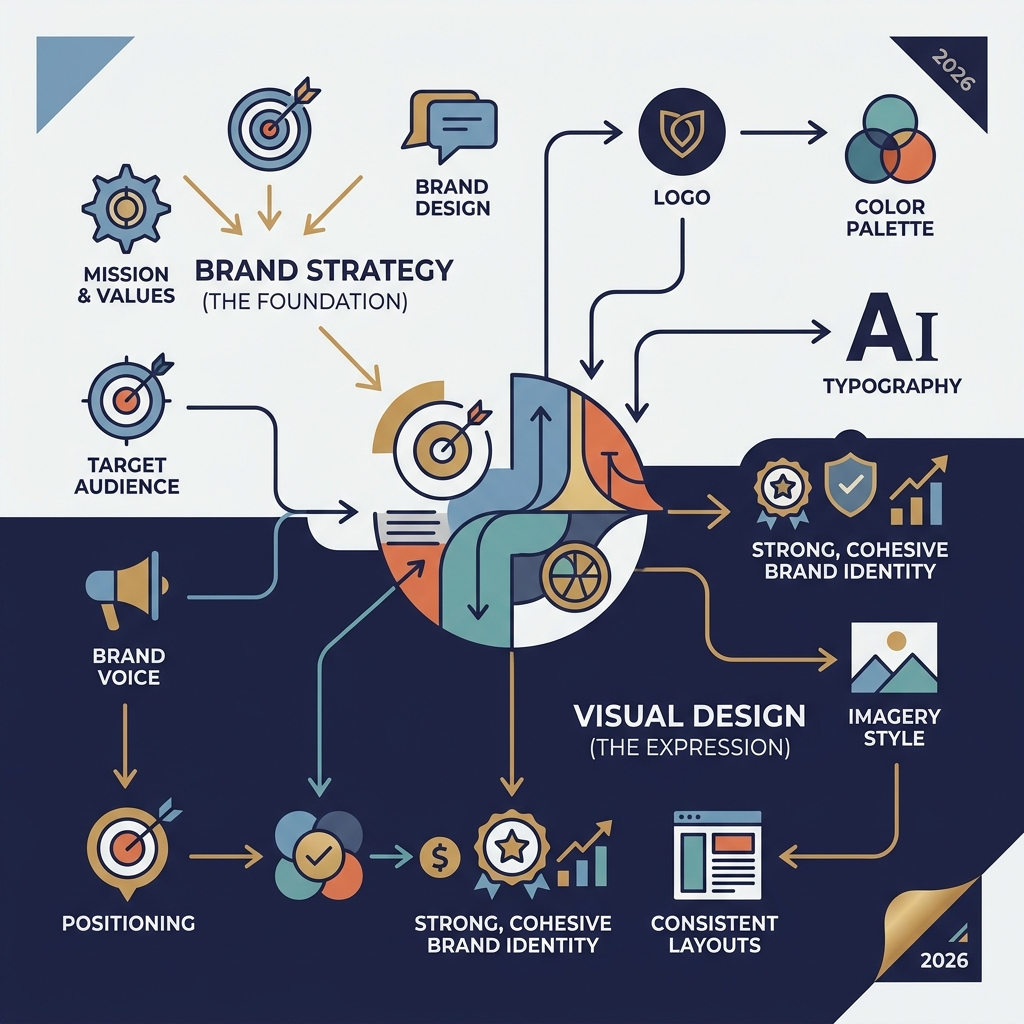
When we talk about branding & graphic design, we are talking about a partnership. Think of branding as the “soul” of your business—the invisible set of values, missions, and promises you make to your customers. Graphic design is the “body”—the physical, visual manifestation that allows people to recognize that soul in a crowded marketplace.

Without a strategy, graphic design is just art. It might look pretty, but it won’t sell products or build loyalty. Conversely, a brand strategy without design is just a document sitting in a folder. It needs a visual voice to speak to the world. This is why we focus so heavily on branding services that bridge the gap between “thinking” and “doing.”
The science backs this up. According to research from Harvard professor Gerald Zaltman, 95% of our purchasing decisions are made in the subconscious mind. Your customers aren’t always reading your copy; they are feeling your brand through its colors, shapes, and layout.
| Feature | Branding (The Soul) | Graphic Design (The Body) |
|---|---|---|
| Focus | Strategy, Emotion, Logic | Visuals, Aesthetics, Function |
| Goal | To build a relationship | To communicate a message |
| Output | Mission, Values, Positioning | Logo, Typography, Layouts |
| Duration | Long-term (The Marathon) | Project-based (The Sprint) |
The Role of Color and Typography in Branding & Graphic Design
If branding is the message, then color and typography are the tone of voice. Imagine someone shouting “I love you” versus whispering it—the words are the same, but the “design” of the delivery changes everything.
Color is perhaps the most powerful tool in a designer’s kit. Research shows that consumers are up to 78% more likely to remember a word or phrase if it’s printed in color rather than black and white. This is why we spend so much time refining the Brand Identity for our clients. Blue can evoke trust and calm (think of big banks or tech companies), while orange screams energy and optimism.
Typography works the same way. A “Serif” font (the ones with the little feet, like Times New Roman) conveys tradition, reliability, and authority. A “Sans-serif” font (cleaner, like Helvetica) feels modern, tech-forward, and approachable. Choosing the wrong font can create “cognitive dissonance”—if a high-end law firm uses a playful, bubbly font, the subconscious mind of the client immediately flags it as untrustworthy.
How Graphic Design Serves as a Tool for Brand Communication
Graphic design isn’t just about making things look “nice”; it is a tool for brand communication that works across every marketing channel you own. Whether it’s a social media post, a physical flyer, or your website, the design is what carries your message to the audience.
In today’s digital landscape, your brand has to be a shapeshifter. It needs to look just as good on a giant billboard as it does in a tiny Instagram profile picture. This requires a flexible visual language. We develop Design Solutions that ensure your brand doesn’t just “fit” on different platforms but actually thrives on them.
Effective communication through design means:
- Clarity: The audience understands what you do in three seconds or less.
- Emotion: The visuals make the audience feel the “vibe” of your company.
- Action: The design guides the eye toward a button, a phone number, or a checkout page.
Core Principles of Effective Branding Design
To create a brand that lasts, we follow a set of core principles. These aren’t just “art rules”—they are business rules.
- Consistency: This is the golden rule. If your Instagram looks like a circus but your website looks like a funeral home, you lose trust.
- Scalability: Your logo must be legible whether it’s on a business card or a skyscraper.
- Recognition: You want people to know it’s you before they even read your name.
- Trust: Professional design signals that you are a real, established business.
A major part of this is understanding all about form in graphic design. The shapes you use—circles for community, squares for stability, triangles for power—all contribute to how your brand is perceived. These elements should be documented in a brand style guide to ensure that anyone working on your brand (from an intern to a high-level agency) stays on the same page.
Maintaining Consistency with a Branding & Graphic Design Style Guide
Consistency isn’t about being boring; it’s about being memorable. Think about the world’s biggest brands. You can recognize their ads without even seeing a logo because the colors, fonts, and “vibe” are so consistent.
Statistics show that 68% of marketers say brand consistency contributed 10-20% (or even more) to their revenue growth. When a customer sees the same visual language across all touchpoints, it reinforces your brand DNA. We call this the Ultimate Design approach—creating a system where every piece of content feels like it belongs to the same family.
A style guide usually includes:
- Logo Usage: Where it goes, how much “breathing room” it needs, and what not to do with it.
- Color Palette: Exact hex codes so your “navy blue” doesn’t turn into “sky blue” on a different screen.
- Typography: Which fonts to use for headings versus body text.
- Imagery Style: Should your photos be bright and airy, or dark and moody?
Building a Strong Identity from Strategy to Assets
Building a brand is a process, not a single event. It starts with strategy and ends with the visual assets that your customers interact with daily.
The first step is always Discovery. We ask the hard questions: Who are you? Who is your competition? What do your customers actually want? This involves deep research on branding and consumer perception to ensure we aren’t just designing for what looks good, but for what works.
Once the strategy is set, we move into the Visual Identity phase. This is where we create your logo system, select your color palette, and define your typography. We don’t just create one logo; we create a “system”—a primary logo, a secondary mark, and a favicon—so you are prepared for any situation. This is what we call Dream Design: a visual identity that perfectly matches your business goals.
When and Why to Consider Rebranding
Brands are living things. Sometimes, they outgrow their original look. Most experts suggest that brands should revisit their identity every 7-10 years, though minor refreshes can happen more often. In fact, 85% of marketers revisit their brand identity either quarterly or annually to stay relevant.
You might need a rebrand if:
- Your audience has shifted: You’re suddenly attracting a younger (or older) demographic.
- Market shifts: Your industry has changed, and you look “dated” compared to competitors.
- Expansion: You started as a local shop but are now a regional powerhouse.
There are major implications when it comes to how the public perceives a business during a rebrand. It’s a delicate balance between honoring your heritage and signaling innovation. Whether it’s a full overhaul or just updated Flyer Designs, a rebrand is a chance to tell a new story to your customers.
Frequently Asked Questions about Branding and Design
What is the difference between branding design and graphic design?
Think of branding as the “why” and graphic design as the “how.” Branding is the strategic foundation—your mission, values, and how you want people to feel. Graphic design is the visual toolset (logos, colors, fonts) used to communicate that strategy. You can have graphic design without branding (like a one-off birthday invitation), but you can’t have a successful business brand without both working in harmony.
Why is consistency so important for business growth?
Consistency builds trust. When a brand looks the same every time you see it, it feels reliable. If your visuals are constantly changing, you look disorganized and unprofessional. Studies show that consistent branding can lead to a 20% or more increase in revenue because it makes your brand more recognizable and easier for customers to choose.
How can startups access professional design on a budget?
Startups don’t always need a $50k agency package on day one. You can start with “lean branding”—focusing on a high-quality logo, a simple color palette, and a clear brand voice. Subscription-based design services or “design-as-a-service” platforms can provide professional-grade assets at a fraction of the cost of a full-time hire. The key is to have a clear brand style guide from the start so your DIY efforts still look cohesive.
Conclusion
At Herow Marketing, we believe that every business deserves a visual identity that works as hard as they do. Our Bethlehem, PA-based team doesn’t just “make things pretty”—we use a time-tested strategic playbook to ensure your branding & graphic design drive measurable growth.
We pride ourselves on full transparency, providing monthly data reports so you can see exactly how your brand is performing. From the initial strategy to the final launch, we are here to be your creative partners.
Your brand has a story. Let us help you tell it visually. Start your branding journey today and let’s build something unforgettable together.