

Audio Post Production Companies: A Masterclass in Sound Design
Audio Post Production Companies: A Masterclass in Sound Design
Why Choosing the Right Audio Post Production Companies Can Make or Break Your Project
When it comes to media that actually moves people, audio post production companies do much of the heavy lifting — even when audiences never notice them. Bad sound pulls viewers out of the experience instantly. Great sound makes everything feel effortless and real.
Here is a quick look at some of the most recognized names in the field:
| Company | Location | Known For |
|---|---|---|
| Skywalker Sound | USA | Feature films, blockbuster franchises |
| Formosa Group | USA | Film, TV, and streaming audio |
| Pinewood Studios Audio | UK | Large-scale film and TV production |
| String & Can | New York, USA | Dolby Atmos mixing, Emmy-winning work |
| POSTRED | Los Angeles / Tbilisi | Cross-border Foley, TPN-certified security |
| Levels Audio | Hollywood, USA | Television, reality, and music mixing |
| Dallas Audio Post | Dallas, USA | ADR, remote sessions, voiceover |
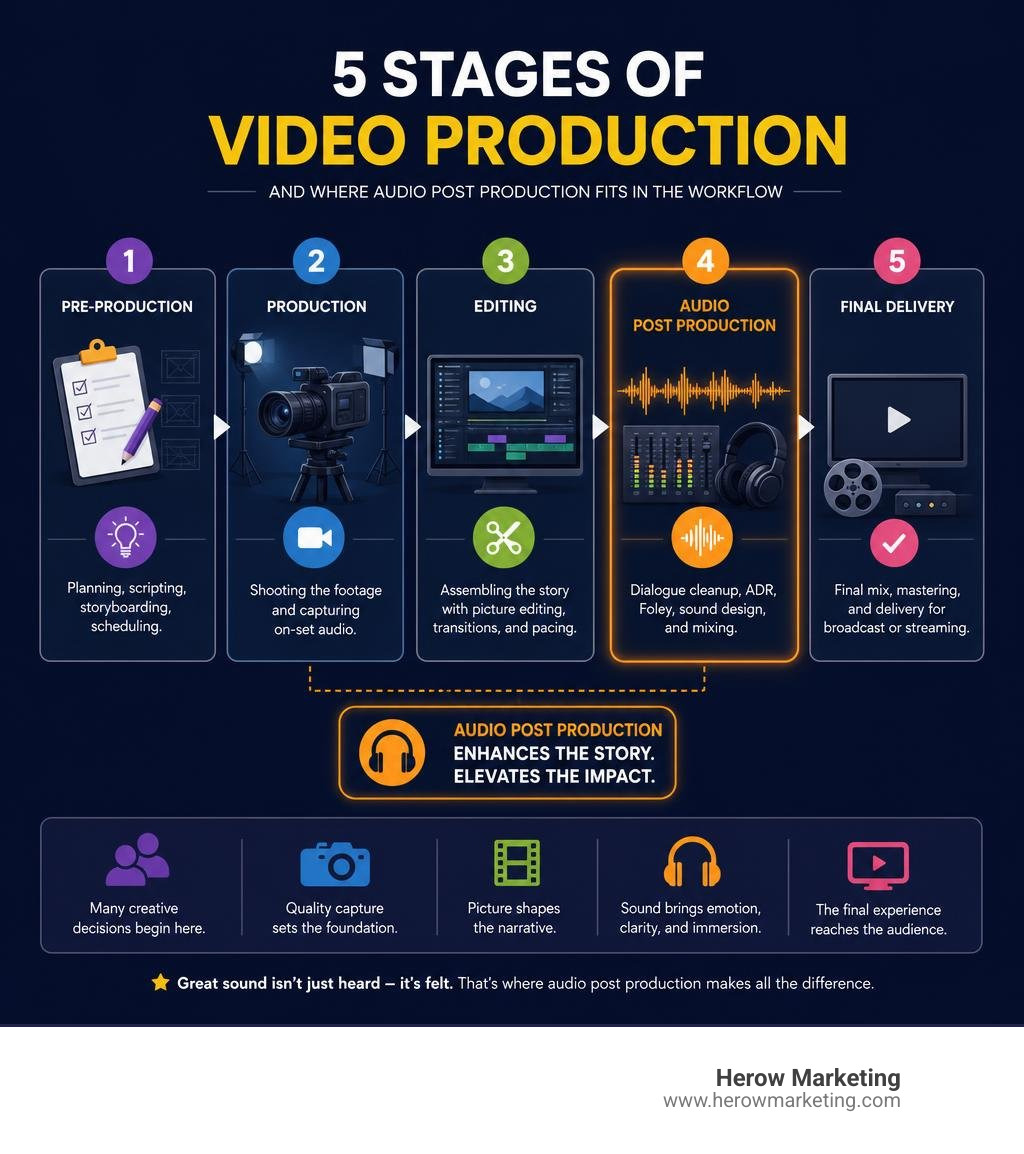
Every project — film, TV series, commercial, podcast, or game — goes through a post-production sound process. That process covers everything from cleaning up raw dialogue to adding custom sound effects, recording Foley, and mixing the final soundtrack to meet broadcast or streaming standards.
Choosing the wrong partner can cost you time, money, and the trust of your audience.
I’m Gianna Heron, founder of Herow Marketing — and while my background spans ballet, branding, and Wall Street finance, I’ve worked closely with creative production teams and understand how audio post production companies fit into the larger storytelling and brand-building process. That cross-industry perspective shapes everything we cover here.
Handy audio post production companies terms:
What is Audio Post-Production and Why It Matters
At its core, audio post-production is the art and science of creating, editing, and mixing synchronized sound for moving pictures. While production audio captures what happens on set, it is rarely ready for the screen on its own. Background hums, passing traffic, and varying acoustics can leave raw recordings sounding disjointed and thin.
Professional audio post-production transforms these raw elements into a polished, cohesive soundtrack. This process is essential for maintaining sonic continuity across scenes, enhancing the emotional impact of a story, and ensuring that dialogue remains crystal clear. Without professional intervention, even the most visually stunning project can feel amateurish.
To explore how these studios operate in detail, check out our guide on audio post production houses.
The Role of Sound Supervision in Creative Alignment
A critical component of this process is sound supervision. A sound supervisor acts as the bridge between the director’s creative vision and the technical sound team. Instead of managing isolated tasks, they oversee the entire post-production audio pipeline, managing assets, maintaining creative alignment, and ensuring that dialogue, effects, and music blend seamlessly.
For producers, having a dedicated sound supervisor means a single point of accountability. They ensure that every footstep, whisper, and musical cue serves the overarching story while keeping the project on schedule and within budget.
Key Services Offered by Professional Audio Post Production Companies

Whether you are producing a feature film or a high-end commercial, professional audio post production companies provide a suite of specialized services designed to take your raw files and turn them into a cinematic masterpiece.
Dialogue Editing and ADR Recording
Dialogue is the narrative backbone of almost any project. Dialogue editors meticulously piece together the best takes, eliminate unwanted background noise, and balance volume levels so that every word is intelligible.
When on-set audio is unsalvageable due to poor environment or performance, Automated Dialogue Replacement (ADR) is used. This process involves bringing actors into a specialized studio to record their lines while watching the filmed scene. Experienced engineers use high-end microphones to match the acoustic space of the original location perfectly.
To understand why the foundation of great dialogue begins long before the microphones are turned on, read our breakdown of audio video production services.
Sound Design, Foley, and Immersive Mixing
Sound design is where your story truly comes to life. Sound designers build custom soundscapes, creating everything from the futuristic hum of a spaceship to the subtle ambient noise of a quiet office.
To add organic texture, Foley artists record physical sound effects in real-time—such as the rustle of clothing, the clink of glasses, or footsteps on gravel—matching the precise movements on screen.
Finally, re-recording mixers bring all these elements together. Using advanced formats like Dolby Atmos and 5.1 surround sound, they place audio elements in a three-dimensional space, drawing the audience directly into the action. You can learn more about how these complex elements are balanced by exploring Audio Post Production Services | Mixing for Film & Video .
Comparing Studio Scales: Boutique vs. Enterprise Facilities
When selecting a partner, you will generally choose between large, enterprise-level studios and smaller, boutique operations. Both models offer distinct advantages depending on your project’s scope, security requirements, and creative needs.
| Feature | Boutique Facilities | Enterprise Studios |
|---|---|---|
| Primary Focus | Hyper-personalized collaboration, agile workflows | High-volume pipelines, multi-department integration |
| Acoustic Spaces | Highly calibrated, intimate mix rooms | Massive scoring stages, multiple theatrical mix bays |
| Security Certification | Varies (select boutique studios hold TPN) | Standardized TPN Gold Shield, Disney, and Warner Bros. compliance |
| Ideal For | Independent films, commercials, custom sound design | Blockbuster features, AAA video games, high-budget episodic TV |
To see how these differences play out across global leaders, take a look at The Best Audio Post Production & Sound Design Companies .
Why Boutique Audio Post Production Companies Offer Greater Flexibility
Boutique studios excel at providing dedicated, highly collaborative partnerships. Because they handle fewer projects simultaneously, their key creative talent is directly involved in your work from start to finish. This close-knit environment fosters deep creative experimentation, allowing directors to work hand-in-hand with sound designers.
Many boutique teams also offer highly competitive, tailored packages without the massive overhead costs of giant facilities. For example, POSTRED operates as a highly agile, cross-border team that scales its resources to meet the creative and financial needs of independent filmmakers and major studios alike.
Enterprise Studios and Global Security Standards
For high-profile studio releases, security is just as important as creative quality. Enterprise facilities offer robust infrastructure designed to protect intellectual property from leaks.
These studios maintain strict compliance with the Trusted Partner Network (TPN), an industry-standard security program powered by the Motion Picture Association. Meeting TPN, Disney, and Warner Bros. Discovery security requirements ensures that sensitive, unreleased media assets are protected by enterprise-grade digital and physical security protocols throughout the entire post-production cycle.
How to Choose the Right Partner for Your Project
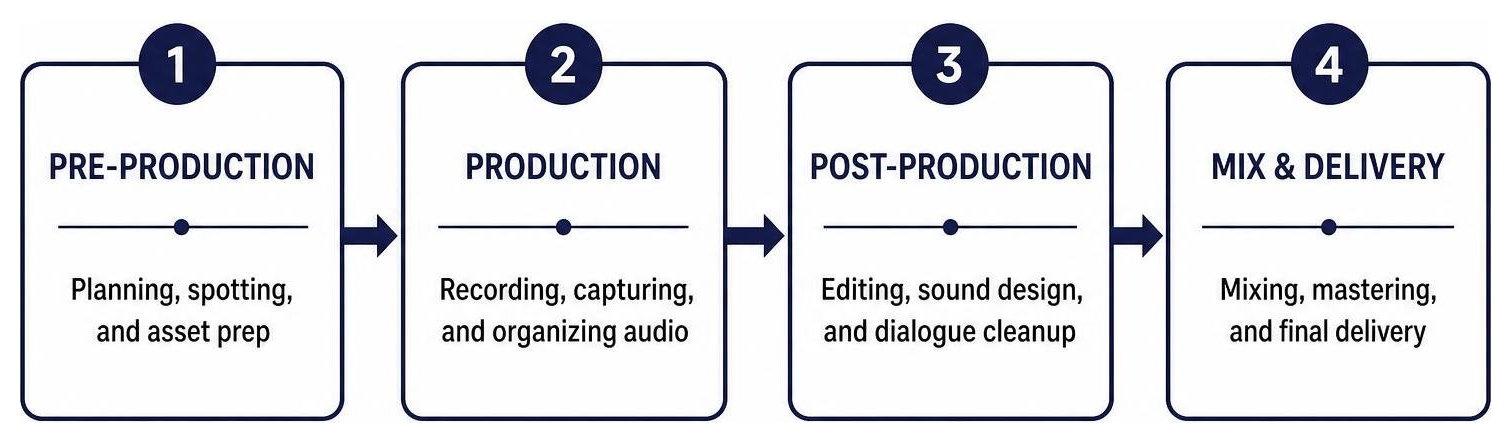
Finding the right audio partner requires balancing creative chemistry with technical capability. If you are operating locally in the Eastern Pennsylvania region, you can look into local production spaces like Studios/Rentals – PBS39 for regional recording and production setups.
No matter where your partner is located, ensure they align with your project’s scope and workflow.
Technical Standards Met by Elite Audio Post Production Companies
An elite audio post facility does more than make your project sound good; they guarantee that your files will pass strict quality control (QC) checks. This includes matching precise loudness standards (measured in LUFS) required by major streaming platforms and broadcasters.
Whether you need a Digital Cinema Package (DCP) for theatrical distribution or must meet strict ACX standards for audiobooks, your post-production partner must understand and deliver these technical formats without errors. For a deeper look at how professional engineers manage these complex workflows, check out Dallas Audio Post — Professional Audio Post-Production & Session Engineering .
Remote Workflows and Real-Time Collaboration
The post-production landscape has shifted toward highly efficient remote collaboration. Today, directors do not need to be in the same room as the mixing engineer to make critical decisions.
Using high-fidelity remote tools like Source Connect, Zoom integration, and real-time streaming platforms, creative teams can monitor frame-accurate, high-definition audio sessions from anywhere in the world. This allows for seamless ADR direction and real-time mix approvals without the travel costs.
To see how remote workflows are changing other audio-first mediums, explore Audio Production Agency The Secret Sauce Of Hit Podcasts.
Frequently Asked Questions about Audio Post-Production
What is the difference between sound design and sound mixing?
Sound design is the creative process of choosing, recording, and creating the individual sound elements—such as sound effects, atmospheric textures, and Foley—that populate your story. Sound mixing (or re-recording mixing) is the process of balancing all of those individual elements (dialogue, music, and sound design) into a cohesive, polished final track that translates perfectly across theater speakers, home TVs, and headphones.
How long does the audio post-production process typically take?
The timeline varies dramatically based on the complexity of the project. A 30-second commercial might take a few days of editing, sound design, and mixing. An episodic television episode typically requires one to two weeks, while a feature-length film can take anywhere from six weeks to several months of dedicated audio work to complete.
What are LUFS and why do they matter for broadcast and streaming?
LUFS stands for Loudness Units relative to Full Scale. It is an industry-standard measurement of perceived audio loudness. Platforms like Netflix, YouTube, Apple, and traditional television networks have strict LUFS delivery specifications (such as the CALM Act for television) to prevent viewers from having to constantly adjust their volume between different shows and commercials.
Conclusion
Great sound design is not just a technical requirement—it is the emotional heartbeat of your visual media. Whether you are working with global enterprise giants or highly collaborative boutique teams, choosing the right audio post-production partner is what elevates your project from good to unforgettable.
At Herow Marketing, based in Bethlehem, PA, we combine creative artistry with data-driven precision. Our media production services are built on a time-tested strategic playbook, backed by full transparency and monthly data reports to drive measurable growth for your brand.
Ready to make your next project sound as spectacular as it looks? Let’s build something incredible together. Explore our Herow Marketing Media Production Services today.