


Digital Growth: Best Ways to Market a Small Business Online
Digital Growth: Best Ways to Market a Small Business Online
Why Finding Easy Ways to Market a Small Business Matters More Than Ever
The best easy ways to market a small business online don’t require a big budget — they require the right moves, done consistently.
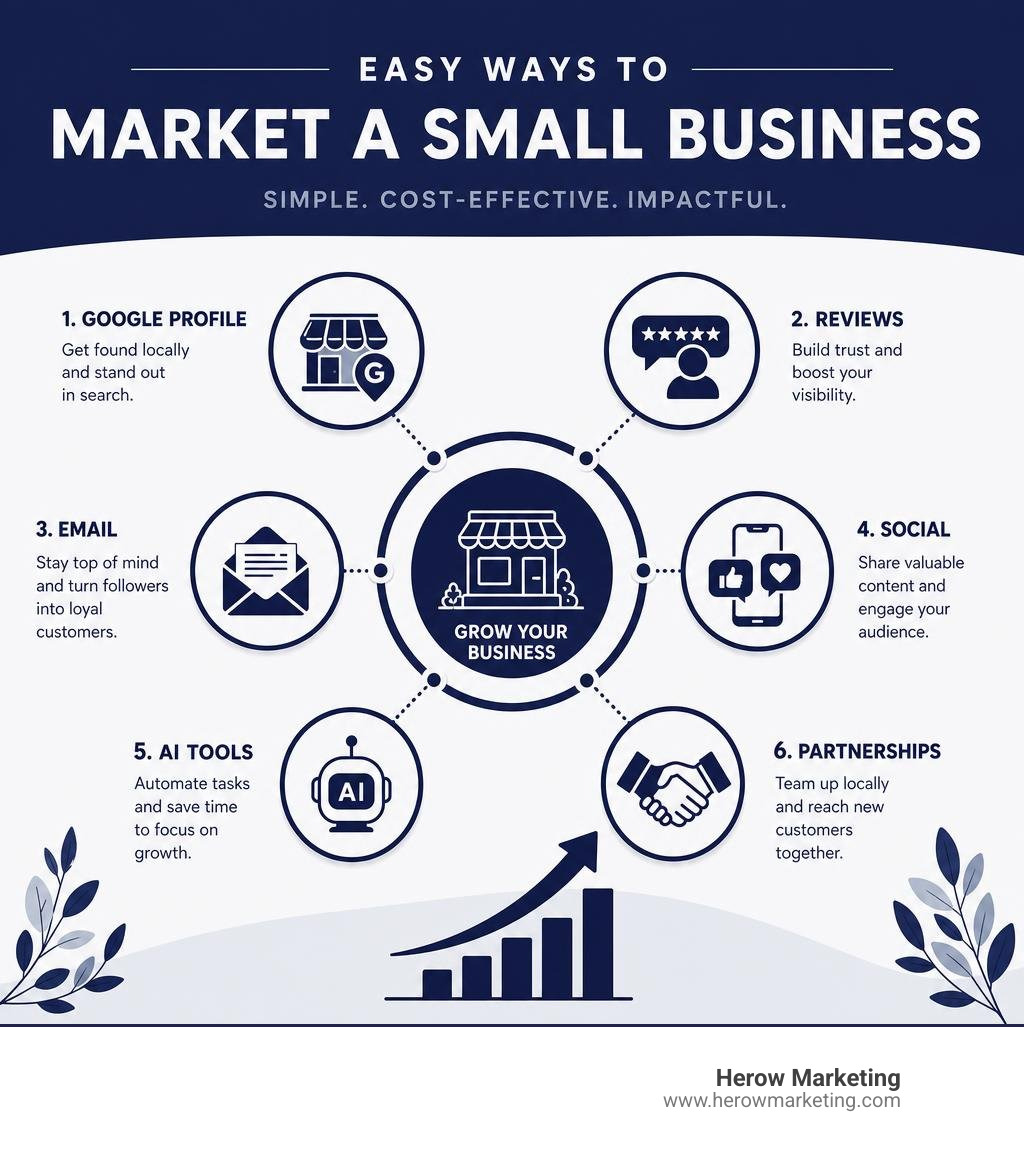
Here’s a quick overview of what actually works:
- Claim and optimize your Google Business Profile — it’s free and drives local search traffic immediately
- Collect customer reviews systematically — reviews build trust and improve your local search ranking
- Engage in local Facebook and Nextdoor groups — organic community reach with zero ad spend
- Start an email list — you own it, and it returns an average of $36 for every $1 spent
- Post consistent social media content — before-and-after photos, user-generated content, and phone-camera video work well
- Use AI tools to automate repetitive tasks — review requests, follow-ups, and content scheduling
- Partner with complementary local businesses — cross-promotion doubles your reach at no cost
- Create a simple, measurable marketing plan — even a one-page plan beats winging it every time
Here’s the reality: almost 94% of the U.S. population is already online. Your customers are searchable, reachable, and ready — the question is whether your business shows up when they look.
Most small business owners assume effective marketing means expensive marketing. It doesn’t. The tools and channels available in 2026 have made it possible to build real visibility, generate genuine leads, and grow a loyal customer base without draining your budget.
You don’t need to do everything. You need to do the right things.
I’m Gianna Heron — after years working across Wall Street finance, brand creative direction, and social media strategy, I built Herow Marketing specifically to help small businesses find easy ways to market a small business with intention and measurable results. Let’s walk through exactly what those strategies look like in practice.
Easy ways to market a small business basics:
1. Dominate Local Search with Google Business Profile
If your small business serves a specific neighborhood or region, local SEO is your absolute best friend. Think about it: when someone needs a quick service, a local shop, or a cozy cafe in Bethlehem, PA, where do they turn? They pull out their phone and search for something “near me.”
The first ten websites on Google’s search results capture an astonishing 86% of all organic clicks. Furthermore, according to Backlinko, moving up just one position in search engine rankings increases your click-through rate (CTR) by more than 32%. If you want to capture that high-intent local traffic, you need to show up where people are looking.
The single most powerful, zero-dollar tool at your disposal is your Google Business Profile (GBP). It is the ultimate driver for local search queries and is practically mandatory for modern local visibility. Understanding how to claim, verify, and maintain this profile is the foundation of any successful local SEO strategy. To get a complete overview of how local SEO fits into your broader digital footprint, explore The Complete Guide to Small Business Marketing.
Optimize Your Profile for Local SEO
Claiming your profile at business.google.com is only step one. To truly dominate the local map pack, you must optimize every single field. This means ensuring absolute NAP (Name, Address, Phone number) consistency across your entire digital footprint. If your address is spelled “Street” on your website but “St.” on your Google profile, search engines can get confused, which quietly hurts your ranking.
Fill out your business hours, list your specific services, and write a compelling description that highlights your unique value proposition. But here is the secret weapon that most of your competitors are ignoring: authentic photos.
Research shows that Google Business Profile listings with authentic images get 42% more requests for directions and 35% more clicks to the website compared to those that rely on sterile stock photography. Ditch the stock photos. Take real, well-lit photos of your team, your physical space, and your completed work.
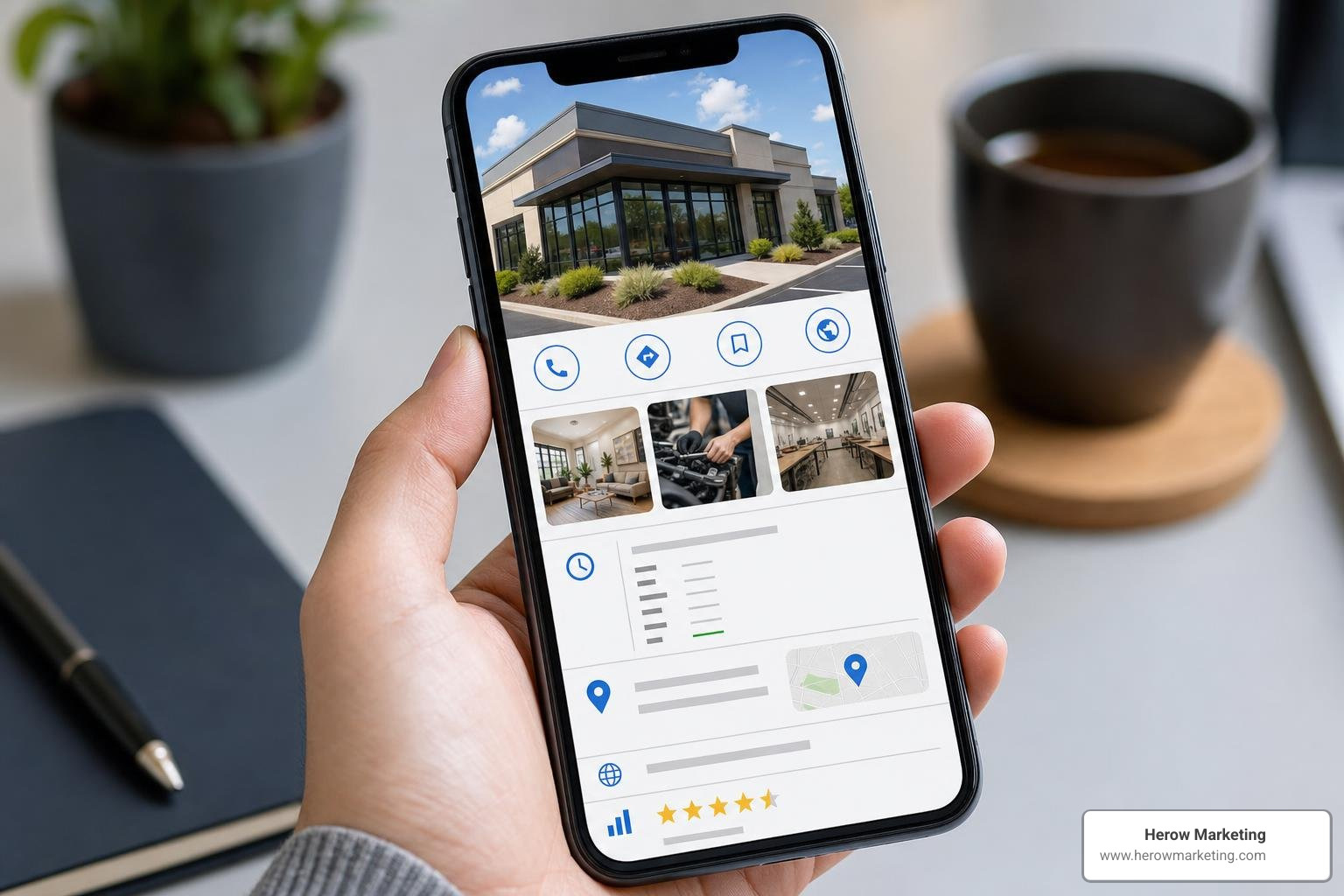
We also recommend posting a weekly update directly to your profile. Think of it as a mini social media feed. A simple photo accompanied by a one-sentence update signals to Google’s algorithm that your business is highly active. For more proven ways to capture local searchers, check out the SBA Local Marketing Strategies.
Collect Reviews as Easy Ways to Market a Small Business Locally
Online reviews are the undisputed currency of local business trust. When local customers compare options, they aren’t just looking at what you say about yourself — they want to see what your past customers say. A local business with 40 reviews and a 4.7-star rating will consistently outrank and outperform a competitor with only 5 reviews and a perfect 5.0 rating.
To turn reviews into one of your most effective easy ways to market a small business, you must collect them systematically. Do not just wait and hope that happy customers will remember to leave a review. Instead, build a simple, repeatable process:
- Send a direct link: Google provides a short, shareable review link inside your GBP dashboard. Copy this link.
- Timing is everything: Text or email this link to your customer within 2 hours of completing a service or making a sale, while the positive experience is still top of mind.
- Keep it warm and direct: Use a simple script: “Thanks for choosing us today! If you have 30 seconds, would you mind sharing your experience on Google? It helps our small business tremendously.”
- Respond to every review: Always respond to all reviews within 24 hours. Thank your supporters, and address any negative feedback with grace, professionalism, and transparency.
2. Leverage Social Media and Community Groups
Social media is a highly effective way to build brand awareness, but many small business owners quickly burn out trying to post on five different platforms every day. The trick is to focus on fewer platforms and show up consistently.
About 55% of customers worldwide discover brands via social media and use it to research brands before deciding whether to make a purchase. However, organic social media reach has changed. Algorithms are noisy, and organic reach is highly unstable. To succeed without a massive ad budget, you must treat social media as a trust and awareness channel rather than a pure sales pitch. For a deep dive into choosing the right platforms and building a sustainable cadence, read A Comprehensive Guide to Social Media Marketing.
Engage in Local Facebook and Nextdoor Groups
Instead of shouting into the void on your own business page, go where your local audience is already hanging out. Local Facebook community groups and Nextdoor neighborhoods are goldmines for organic lead generation.
Every single day, neighbors in these groups ask questions like, “Can anyone recommend a reliable house painter in Bethlehem?” or “Who is the best local florist?”
To leverage these groups effectively, follow the rule of value-first communication:
- Join 5 to 15 local groups using your personal profile (or your business page, if the group rules allow).
- Spend 10 to 15 minutes a day scanning these groups for relevant keywords.
- Be helpful, not salesy. If someone asks a question related to your industry, give them free, expert advice without immediately dropping a pitch. Build a reputation as a helpful neighbor first.
- Let your profile do the work. Ensure your personal social profiles clearly link to your business website so that when people click your name, they immediately see what you do.
This zero-cost strategy builds immense goodwill. For more low-cost community tactics, check out Penny-Pinching Promotion: Cheap Ways to Market Your Business.
Use Social Platforms as Easy Ways to Market a Small Business Online
When it comes to creating content for your social channels, authenticity beats high-production polish every single time. You do not need to hire a professional production crew or buy expensive cameras. Your smartphone is more than enough.
Some of the highest-performing organic content formats include:
- Before-and-after photos: Take photos from the exact same angle. A clean, visual transformation is incredibly satisfying and highly shareable.
- Phone-camera video: Take quick, 5-second videos of your process. Show behind-the-scenes moments, introduce your team, or share a quick tip. Natural light is your best friend — simply move your subject near a window to make phone photos look professional.
- User-generated content (UGC): Encourage your customers to post photos of your products or services using a branded hashtag, then repurpose that content on your own channels.
An incredible 87% of marketers state that video content has directly increased sales and helped generate leads. Focus on creating helpful, entertaining, or educational videos. For a detailed roadmap on starting with zero budget, see the Monolit $0 Marketing Guide for 2026.
3. Build an Owned Audience with Low-Cost Email Marketing
While social media platforms can change their algorithms overnight, your email list belongs entirely to you. Email marketing is permission-based, meaning your subscribers have actively opted in and want to hear from you. This direct access makes email one of the most reliable and highest-performing marketing channels in existence.
In fact, email marketing has an average return on investment (ROI) of $36 for every $1 spent, and 79% of marketers place email in their top three most effective channels. If you are ignoring email, you are leaving money on the table. To learn how to integrate email into your overall brand strategy, take a look at How to Market Your Small Business Like a Pro.
Set Up Automated Email Campaigns
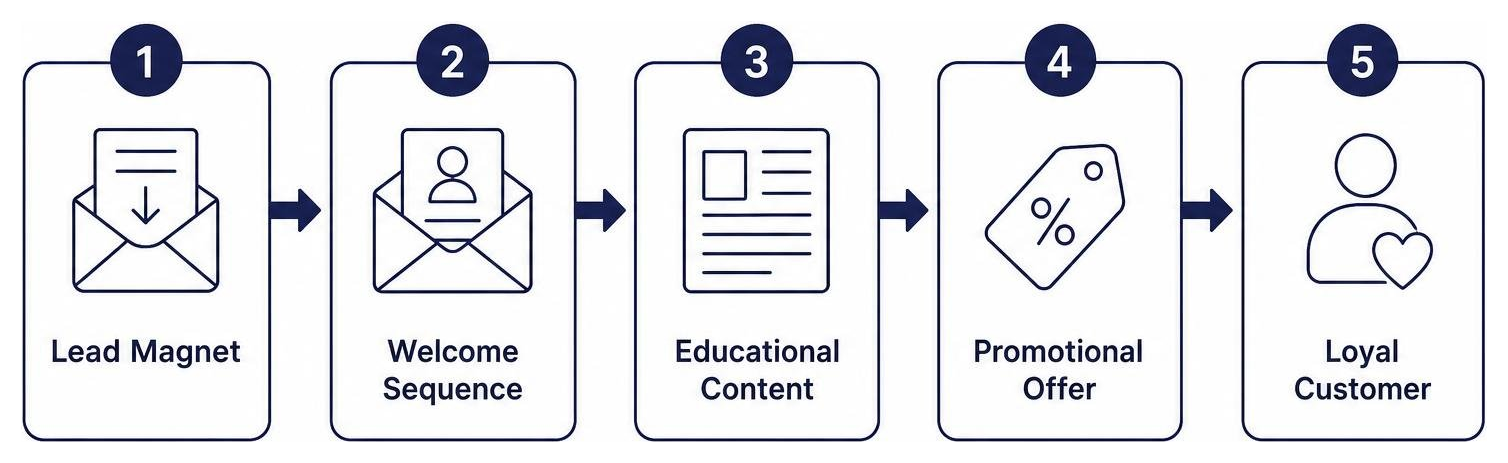
You do not need to spend hours writing manual emails every week. By using free or low-cost email tools, you can set up simple automated email campaigns that work for you in the background.
- The Welcome Series: When someone signs up for your list (perhaps in exchange for a 10% discount or a helpful PDF guide), trigger an automated welcome email. Introduce your brand, set expectations, and deliver immediate value.
- List Segmentation: Segment your list based on customer behavior, demographics, or past purchases. Sending a highly relevant email to a small group of interested subscribers always outperforms sending a generic blast to your entire list.
- A/B Testing: Regularly test different subject lines, call-to-action buttons, or email designs to see what drives the highest open and click-through rates.
- Keep Designs Simple: Plain, well-written text emails often outperform fancy, heavily-designed newsletters because they feel personal and don’t get trapped in promotional tabs.
4. Discover Easy Ways to Market a Small Business with AI and Free Tools
We live in an era where advanced technology is highly accessible. More than 80% of small businesses already use artificial intelligence in their marketing. AI is not about replacing the human touch; it is about eliminating repetitive, manual tasks so you can focus on running your business.
Using AI strategically prevents “tool sprawl” — the exhausting habit of managing ten different single-point tools that don’t talk to each other.
Automate Repetitive Tasks with AI
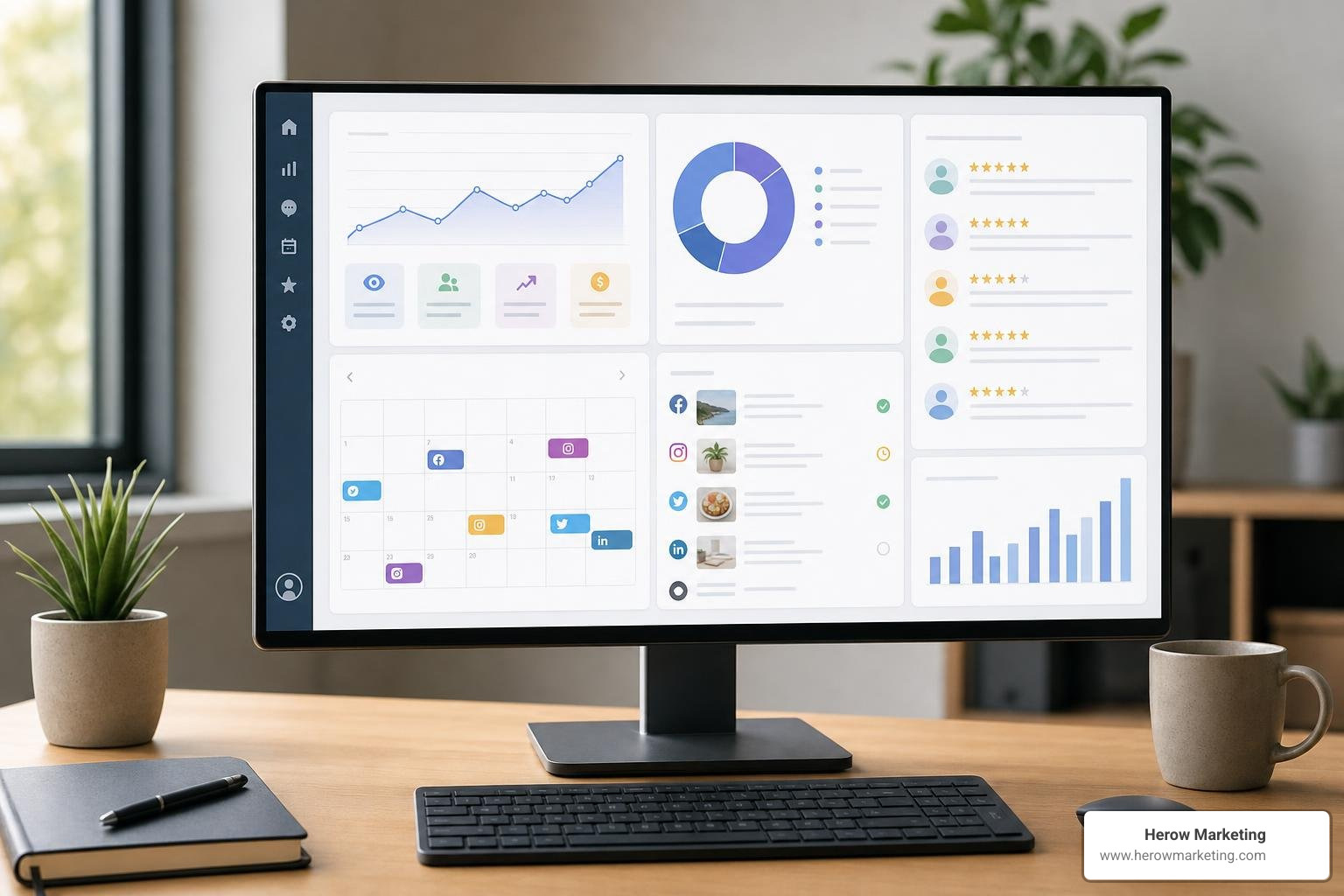
The easiest place to start with AI is by automating the daily tasks that slow you down. If you are losing leads because you take too long to respond, or if you struggle to find time to post on social media, AI can help.
- Automated Review Requests: Use tools to automatically trigger a personalized review request text message to a client immediately after a job is marked complete.
- Immediate Lead Follow-Up: Set up an AI-driven auto-responder to instantly reply to inbound website leads, even outside of standard business hours, keeping prospects warm before they contact a competitor.
- Social Media Scheduling: Use tools like ContentFactoryAI or other scheduling agents to draft, optimize, and schedule a month’s worth of social media posts in a single afternoon.
Leverage Free Content Creation and SEO Tools
Search engine optimization has evolved. With search engines integrating conversational AI answers, small businesses must adapt by focusing on Answer Engine Optimization (AEO). This means structuring your website content so AI search models can easily parse, understand, and cite your page.
- Answer the Question First: Write content that answers the target query directly in the first two sentences of your page.
- Implement Schema Markup: Use free tools to add LocalBusiness, Article, or FAQ schema markup to your website’s code, signaling your exact location, hours, and services to search engines.
- Google Search Console: Use this free tool to track which keywords bring organic traffic to your site and identify any technical indexing issues.
- Keep Content Hyper-Local: While AI models can write generic articles, they struggle with hyper-local, current, and nuanced information. Write about local events, community guides, and specific local projects to win search terms that AI cannot easily duplicate.
5. Create a Structured, Low-Cost Marketing Plan
A successful marketing strategy requires a clear, structured plan. Without a plan, you risk spending time and money on random tactics that don’t move the needle.
A strong marketing plan outlines your target market, defines your competitive advantage (such as specialized certifications, eco-friendly materials, or superior local service), and sets clear, measurable goals. To learn how to structure your business goals and plan operations for success, refer to the SBA Marketing and Sales Guide.
Measure Performance and Track ROI
To make every dollar count, you must track your results. Set realistic, specific, and time-bound key performance indicators (KPIs) rather than focusing on vanity metrics like “likes” or “followers.”
We highly recommend setting up Google Analytics 4 (GA4) and a lead-tracking CRM to measure exactly where your leads are coming from. For a step-by-step guide on setting up your first measurement system, see The Ultimate Guide to Your First Analytics Dashboard Setup.
To help you decide where to focus your efforts, here is a quick comparison of digital and offline marketing metrics:
| Marketing Channel | Primary Metric to Track | Average Cost | Expected Timeline for Results |
|---|---|---|---|
| Google Business Profile | Clicks to website, direction requests, phone calls | Free | 1 to 3 months |
| Email Marketing | Open rate, click-through rate, conversions | Free to low-cost | Immediate |
| Local SEO & Blogging | Organic search impressions, keyword rankings | Free (organic effort) | 3 to 6 months |
| Social Media (Organic) | Engagement rate, direct message leads | Free | 1 to 3 months |
| Offline Print & Promo | QR code scans, unique promo code redemptions | Low-cost ($100 – $500) | Varies by distribution |
Integrate Offline and Community-Based Tactics
While digital channels are highly scalable, physical, offline marketing remains incredibly powerful for local small businesses. Physical marketing materials cut through digital clutter because they have tangibility and permanence.
Over 75% of customers say they have remembered a business specifically because of its physical signage. To make physical marketing work, ensure your brand remains consistent across all materials, and always include a digital tracking mechanism like a unique QR code or custom short URL.
- Local Event Sponsorship: Sponsor a local youth sports team, charity run, or school fair in Bethlehem, PA. This can boost your local brand recognition by up to 25%.
- Strategic Partnerships: Partner with non-competing, complementary businesses to cross-promote. For example, a local house painter can partner with an interior designer, or a gym can team up with a healthy meal prep service to share client bases.
- Referral Programs: Encourage word-of-mouth by offering direct incentives. Over 50% of customers are motivated to refer a business when offered exclusive discounts, loyalty points, or free samples.
For a complete checklist of physical marketing materials, read the Fit Small Business Print & Promo Guide. For more creative out-of-the-box ideas, explore Bold and Creative Marketing Strategies: Small Business Edition.
Frequently Asked Questions about Small Business Marketing
How can I market my small business with no money?
You can market your small business with absolutely no money by focusing entirely on organic, high-impact digital strategies. First, claim and fully optimize your Google Business Profile. Second, systematically ask every satisfied customer for a Google review. Third, join local Facebook and Nextdoor community groups to answer questions helpfully and build your local reputation without pitching.
What is the most effective free marketing strategy?
The most effective free marketing strategy for a local small business is a fully optimized Google Business Profile combined with a consistent review collection system. Because Google Business Profile targets customers who are actively searching for your services in your immediate area, it delivers the highest conversion rates and local visibility of any free marketing channel.
How does AI help small businesses with marketing?
AI helps small businesses by automating time-consuming, repetitive tasks. It can automatically send review requests to customers, respond instantly to inbound leads after-hours, draft social media captions, schedule content, and help optimize website copy for modern search engines. This allows business owners to maintain a consistent marketing presence without spending hours on manual work.
Conclusion
Finding easy ways to market a small business isn’t about chasing every new digital trend — it’s about executing a few high-impact strategies with absolute consistency. By claiming your local search presence, engaging genuinely with your local community, building your own email audience, and leveraging smart automation tools, you can drive measurable growth on any budget.
At Herow Marketing, we believe you shouldn’t have to guess whether your marketing is working. Our time-tested strategic playbook and full transparency via monthly data reports ensure your business achieves real, measurable growth.
Ready to simplify your marketing and start seeing real results? Explore Our Services today and let’s build your growth engine together.