


The Ultimate Guide to Online Reputation Management for Fixing Negatives
The Ultimate Guide to Online Reputation Management for Fixing Negatives
What is Online Reputation Management and Why It Matters
Online reputation management (ORM) encompasses the strategies, processes, and tools an organization uses to monitor, analyze, and shape public perception across the web. While traditional public relations focused on press releases and print media, modern ORM spans Google Business Profiles, social media platforms, industry review channels, news outlets, and forum discussions.
In today’s digital marketplace, your digital reputation acts as your virtual storefront. Consumers no longer rely solely on brand messaging—they trust peer experiences. Consider these key insights:
- 86% of consumers actively read online reviews for local businesses before making a purchasing decision.
- 95% of consumers aged 18 to 34 rely on local business reviews.
- 54% of consumers put their trust in online reviews above personal recommendations and company claims.
- 91% of young adults (18–34) trust online reviews as much as direct recommendations from friends and family.
- On average, shoppers read 10 online reviews before feeling confident enough to trust a brand.
Ignoring your online brand health comes at a steep price:
- A single unaddressed negative review can cost a business up to 30 potential customers.
- 32% of shoppers will completely walk away from a brand after just one bad experience.
- Businesses that ignore customer complaints suffer a 37% decline in overall customer advocacy.
Taking control of your digital footprint allows you to build sustainable brand equity and ensure that search engines display an accurate, positive narrative. To gain complete authority over what appears when prospective clients search for your brand, check out The Ultimate Guide to Owning Your Google Search Results.
How Search Engine Rankings Depend on Online Reputation Management
Search engines like Google prioritize delivering trustworthy, relevant results to users. Therefore, your online sentiment directly impacts your search performance—especially within the Google Local Pack.
Key search signals related to ORM include:
- Review Quantity and Recency: Top-ranked local search results feature an average of 38 reviews, compared to just 14 for lower-ranked businesses. Additionally, 40% of consumers only care about reviews written within the past two weeks.
- Average Star Ratings: Achieving high star ratings boosts click-through rates. Research published in the Harvard Business Review revealed that when businesses actively respond to reviews, their average rating increases by 0.12 stars.
- Review Diversity and Keywords: Unsolicited reviews containing relevant service keywords provide semantic context to search crawlers, elevating local visibility.
The Strategic Benefits of Proactive Brand Care
Managing your reputation yields compound benefits across every facet of your organization:
- Increased Sales and Conversion Rates: Higher ratings lower customer friction, turning organic visitors into paying customers.
- PR Crisis Prevention: Continuous monitoring allows you to identify customer complaints early, preventing isolated issues from snowballing into viral PR nightmares.
- Improved Talent Acquisition: Skilled job seekers research company cultures on platforms like Glassdoor and LinkedIn before applying. A strong employer reputation attracts top talent.
- Enhanced Marketing ROI: Organic social proof amplifies your paid advertising campaigns, lowering customer acquisition costs across the board.
Monitoring and Managing Your Digital Presence

You cannot manage what you do not measure. Establishing a robust monitoring framework ensures you stay informed about online discussions surrounding your business.
Social listening involves tracking indirect mentions, industry terms, and brand sentiment across web forums, social media channels, news blogs, and specialized review portals. By analyzing sentiment trends over time, you can fix operational issues before they damage customer relationships.
Additionally, maintaining high search rankings requires a clean web authority profile. To safeguard your domain against toxic backlinks that could harm your search engine visibility, read our guide to Clean Up Your Link Profile Before Google Does It For You.
Essential Tools for Online Reputation Management
To scale your monitoring efforts efficiently, leverage dedicated ORM technology:
- Google Alerts: A simple, free tool to receive automated email notifications whenever your brand name or executive leadership is indexed in new web content.
- Social Listening Dashboards: Enterprise platforms aggregate brand mentions across networks like Reddit, X, Facebook, and Instagram into a central feed.
- Review Aggregation Software: Centralizes customer ratings from Google, Yelp, and industry channels into a single dashboard, allowing your team to reply quickly.
For a comprehensive evaluation of cost-effective platforms designed to streamline this process, explore The Best Affordable Reputation Management Solutions for 2025.
Conducting Brand Audits Across Digital Touchpoints
Conducting a digital brand audit helps uncover hidden feedback and clear out accurate business listings across search ecosystems.
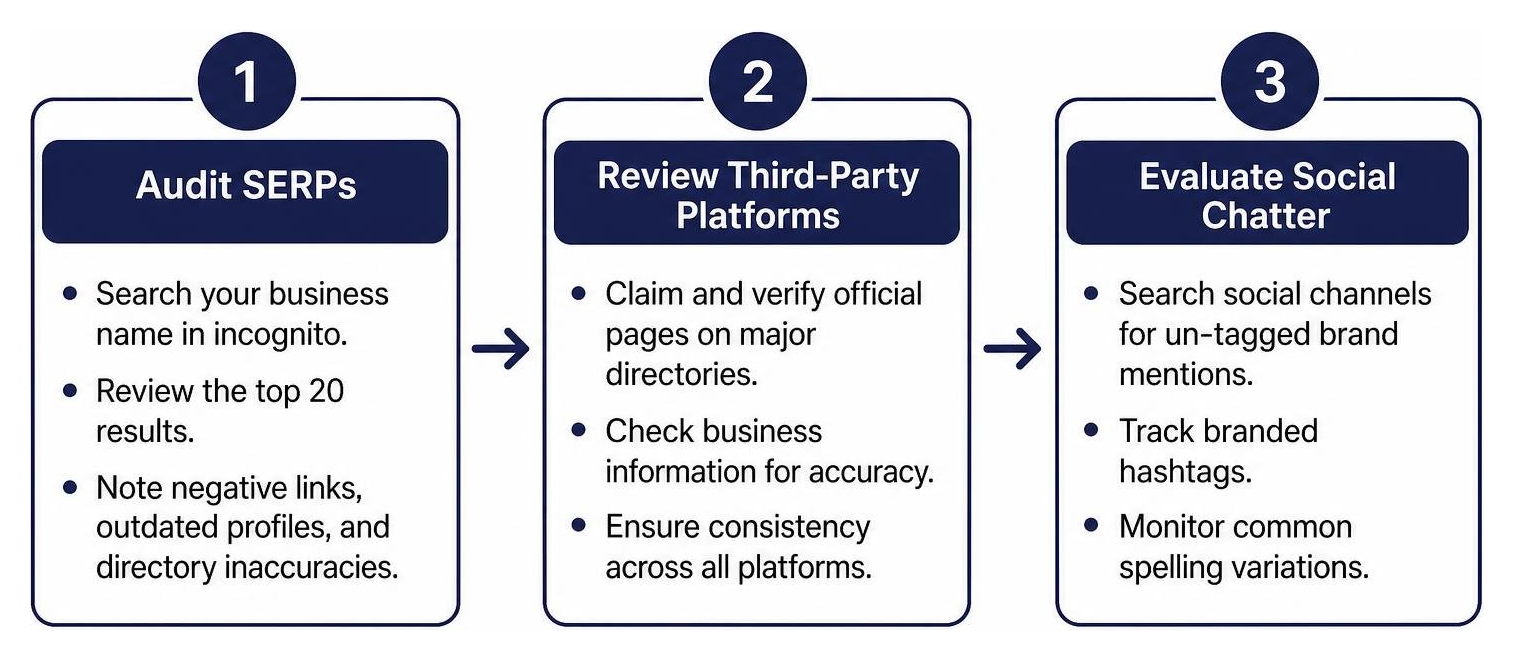
To perform a thorough audit:
- Audit SERPs: Search your business name in an incognito browser window. Review the top 20 results, noting any negative links, outdated profiles, or directory inaccuracies.
- Review Third-Party Platforms: Claim and verify your official pages on major directory platforms (Google Business Profile, Yelp, TripAdvisor, Better Business Bureau).
- Evaluate Social Chatter: Search social channels for un-tagged brand mentions, branded hashtags, and common spelling variations.
To systematically evaluate your entire website’s search performance, follow these Website Audit Steps.
Effective Strategies for Responding to Positive and Negative Reviews

Prompt, professional review responses show current and future customers that you value accountability. Research shows that 42% of consumers complaining on social media expect a response within an hour, while over a third expect a response within three days or less.
| Reputation Management Approach | Reactive Strategy | Proactive Strategy |
|---|---|---|
| Primary Goal | Damage control and public defense | Long-term trust and organic review generation |
| Response Speed | Delayed; responding after complaints escalate | Swift; within 24–48 hours across all platforms |
| Review Strategy | Waiting for reviews to trickle in organically | Automated email/SMS review invitations |
| Operational Impact | Treating complaints as isolated PR issues | Feeding feedback into product & service upgrades |
Turning Negative Reviews Into Customer Retention
When handling negative feedback, maintaining a professional, calm approach is critical. Responding defensively often causes more damage than the original complaint.
Follow this battle-tested negative review resolution framework:
- Acknowledge and Apologize: Validate the reviewer’s feelings with genuine empathy. 39% of customers leaving negative feedback simply want an apology.
- Highlight Your Commitment to Quality: Briefly restate your usual standards to contextualize the situation for future readers.
- Move the Conversation Offline: Provide a direct email address or direct phone line for a manager to handle the discussion privately.
- Offer a Fair Resolution: Offer a refund, product replacement, or a complimentary re-experience to demonstrate your commitment to making things right.
When handled correctly, dissatisfied customers often edit or remove their bad reviews after receiving great service.
Best Practices for Amplifying Positive Feedback
Never leave a positive reviewer hanging! Responding to happy customers reinforces brand loyalty and encourages repeat business.

Key strategies to turn positive experiences into lasting assets:
- Express Sincere Gratitude: Thank the reviewer by name and reference specific details from their feedback.
- Spotlight Positive Reviews: Convert glowing feedback into visual graphics for your social media channels, website homepages, and sales collateral.
- Ask Directly: Up to 70% of customers will leave a review if you simply ask them.
- Optimize Operational Triggers: E-commerce brands can use branded packaging, thank-you cards, and unboxing designs to encourage customers to share their unboxing experience on social media.
Frequently Asked Questions About Digital Reputation
How long does it take to see results from reputation efforts?
Initial improvements—such as resolving customer complaints and displaying response activity on review profiles—can occur within days. However, building long-term search engine authority and significantly raising overall star ratings typically takes 3 to 6 months of consistent review generation and strategic search engine optimization.
Should small businesses manage reputation DIY or hire a professional?
Most small business owners can handle basic online reputation management themselves by dedicating 2 to 3 hours per week to checking review dashboards and responding to customer comments.
However, if your business suffers from a reputation crisis, defamatory review attacks, or severe local search ranking drops, partnering with a dedicated agency can save time and protect your revenue. For actionable budgeting tips, read our article on Finding an Affordable Reputation Management Company.
What are the biggest mistakes businesses make when handling online feedback?
Avoid these common ORM pitfalls:
- Buying Fake Reviews: Purchasing fake reviews violates Google Search guidelines and platform terms of service, risking account suspensions and legal fines.
- Deleting Bad Comments: Deleting legitimate criticism destroys consumer trust and often drives frustrated customers to air their grievances on public forums.
- Using Template Responses: Posting repetitive, canned replies shows a lack of care and alienates customers looking for authentic support.
- Ignoring Customer Complaints: Leaving reviews unaddressed shows potential buyers that your business does not care about customer satisfaction.
Conclusion

Building and maintaining a strong online reputation is an ongoing strategic process, not a one-time project. By actively monitoring digital mentions, encouraging positive customer reviews, and resolving negative feedback with professionalism and care, you can build lasting consumer trust and drive consistent business growth.
At Herow Marketing, based in Bethlehem, Pennsylvania, we help businesses take control of their online presence through data-driven digital strategies, SEO support, and comprehensive review management playbooks. To discover how our team can help protect your brand image and turn customer feedback into revenue, Explore Our Digital Marketing Services today. For additional national support resources, consider exploring specialized Online Reputation Management Agencies In United States or comprehensive platforms like Reputation.