
Stop Being Bland with These Branding Workshop Sessions
Stop Being Bland with These Branding Workshop Sessions
Why Branding Workshop Sessions Are the Fastest Way to Fix an Inconsistent Brand
Branding workshop sessions are structured, facilitated meetings where your team defines the core elements of your brand — from values and voice to positioning and visual direction — all in one focused sitting.
Here’s a quick look at what they cover and who they’re for:
| What | A guided session to align your team on brand strategy |
|---|---|
| Who | Business owners, founders, marketing leads, and key stakeholders |
| Duration | Typically 3 to 8 hours (or spread across multiple days) |
| Key outputs | Brand positioning, messaging, values, voice, and visual direction |
| When to use | New brand launch, rebrand, or when your team isn’t aligned |
| Run by | An internal lead or external brand strategist/facilitator |
If your branding feels scattered — your social posts look different from your website, your team describes the company differently to every client, or your marketing just isn’t clicking — you’re not alone. Most small businesses don’t have a branding problem. They have an alignment problem.
That’s exactly what branding workshops solve.
The hard truth? Over 90% of buying decisions are driven by emotion, not logic. That’s brain science, not marketing fluff. Yet most small businesses skip the strategic foundation entirely and jump straight to logos and color palettes. The result is a brand that looks busy but feels empty — and customers can tell.
A well-run branding workshop forces the right conversations before a single design decision is made.
I’m Gianna Heron — with a background spanning creative direction, Wall Street finance, and building Herow Marketing from the ground up — I’ve seen how branding workshop sessions create the strategic clarity that turns a scattered brand into a growth engine. Let’s walk through exactly how to run one that actually works.
Must-know branding workshop sessions terms:
What are Branding Workshop Sessions and Why Do They Matter?
When we talk about Branding, we aren’t just talking about a pretty logo. We’re talking about the subconscious “gut feeling” a customer has when they hear your name. As of May 2026, the marketplace is noisier than ever. If you aren’t intentional about your brand, the market will define it for you—usually in a way that’s generic and forgettable.
The science is clear: over 90% of buying decisions are purely emotional. This isn’t just true for impulse-buying a candy bar; it applies heavily to B2B services and high-ticket items. People buy from those they trust and feel aligned with. Branding workshop sessions are the engine that uncovers that emotional core.
The Power of Abstract Thinking and Equity
Research shows that brands with distinct, abstract names have 15% higher long-term equity than those that use generic descriptors. Why? Because an abstract name allows you to own a “concept” rather than just a category. Think about how a workshop helps you find that “white space” in a competitive market. It allows you to extract “tacit knowledge”—the deep, unspoken expertise living in your team’s heads—and turn it into a public-facing strategy.
By the end of a session, you aren’t just looking for a tagline; you’re looking for the “Why.” Why do you exist beyond making a profit? When your team aligns on this, internal buy-in skyrockets. You stop fighting over font sizes and start moving toward a unified vision.
Preparing for Success: Logistics and Participants

A successful workshop doesn’t start when the clock hits 9:00 AM. It starts weeks before. Preparation is the difference between a productive day and an expensive chat.
First, let’s talk timing. A high-impact session typically lasts between 3 to 6 hours. Anything shorter feels rushed; anything longer leads to “brain fry.” If you have a complex organization, we often recommend splitting the session into two days.
The Pre-Work Phase
We always send out pre-work questionnaires to participants. These aren’t homework assignments to be graded; they are “priming” tools. We ask questions like:
- “If our brand was a person, who would they be?”
- “What is the biggest misconception customers have about us?”
- “Which competitor do you secretly admire, and why?”
This ensures everyone arrives with their “brand brain” turned on. It also helps us set clear objectives. Are we here for a total rebrand, or are we just sharpening our messaging?
Logistics and Venue
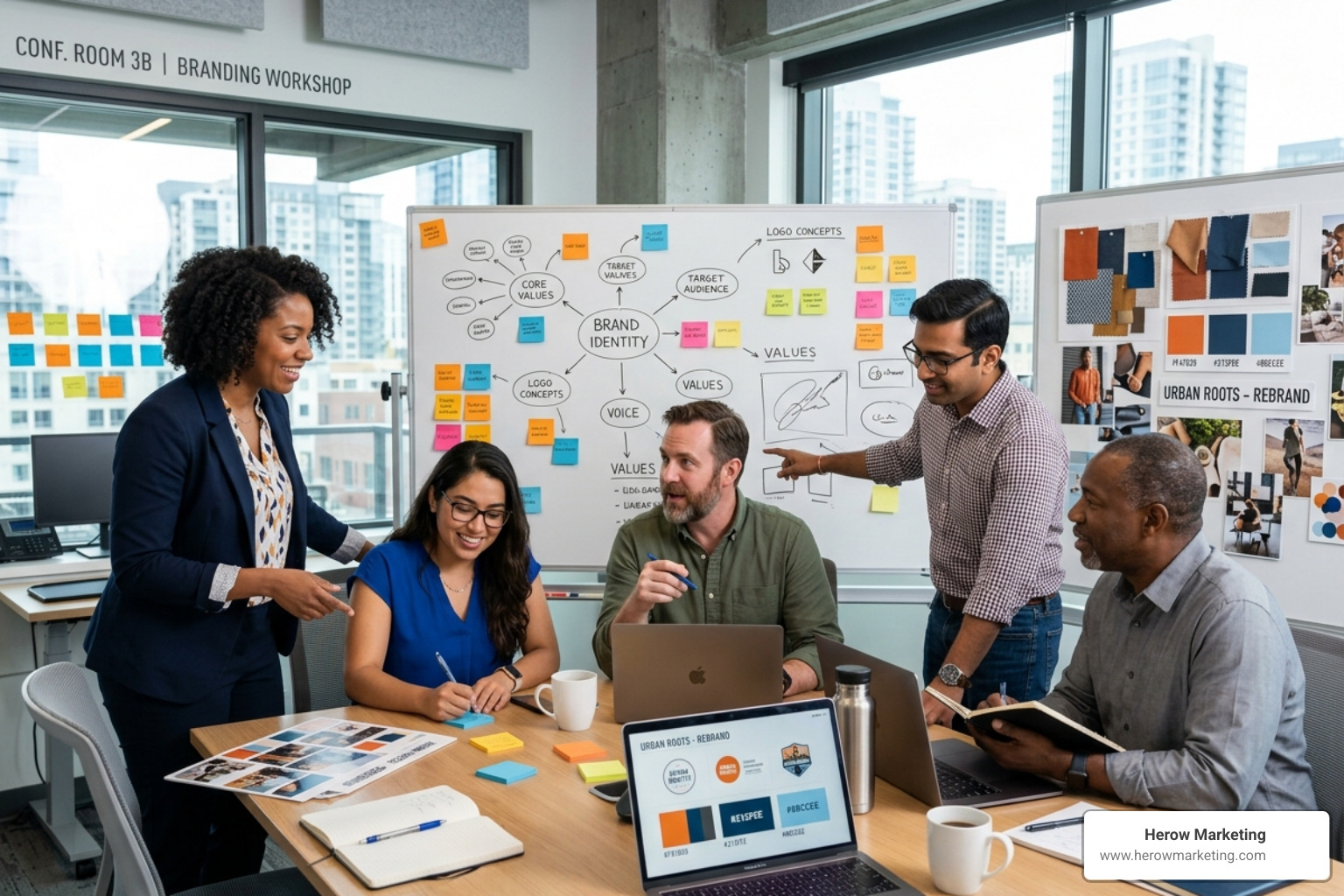
If you’re in the Bethlehem, PA area, finding a neutral, inspiring space is key. Avoid the usual conference room where you hold “boring” meetings. You want a space that allows for movement.
- Materials: You’ll need whiteboards, stacks of sticky notes (aim for at least 90 per group), and plenty of markers.
- Comfort: This is a professional recommendation—wear comfortable shoes. You’ll be standing, moving sticky notes, and engaging in high-energy debates.
- Food: Never underestimate the power of high-quality snacks. Low blood sugar is the enemy of creativity.
As we discuss in Branding Strategies for Startups: Why Your Logo is Not Your Identity, the physical environment helps signal that this is “big picture” work, not just another day at the office.
Who Should Attend Branding Workshop Sessions?
The “who” is just as important as the “how.” We recommend a group size of 5 to 15 participants.
- Too few (less than 5): You lack diversity of thought and risk “echo chamber” syndrome.
- Too many (more than 15): The session turns into a town hall meeting where nothing gets decided.
You need a cross-functional team. Don’t just invite the marketing department. You need:
- The Decision-Makers: The CEO or Founder must be there to provide the vision (and the final “yes”).
- The Front Line: Sales and customer support staff who talk to real humans every day.
- The Product Experts: The people who actually build what you sell.
- The Skeptics: Every team has one. Their critical eye is vital for stress-testing new ideas.
The Step-by-Step Agenda and Exercises
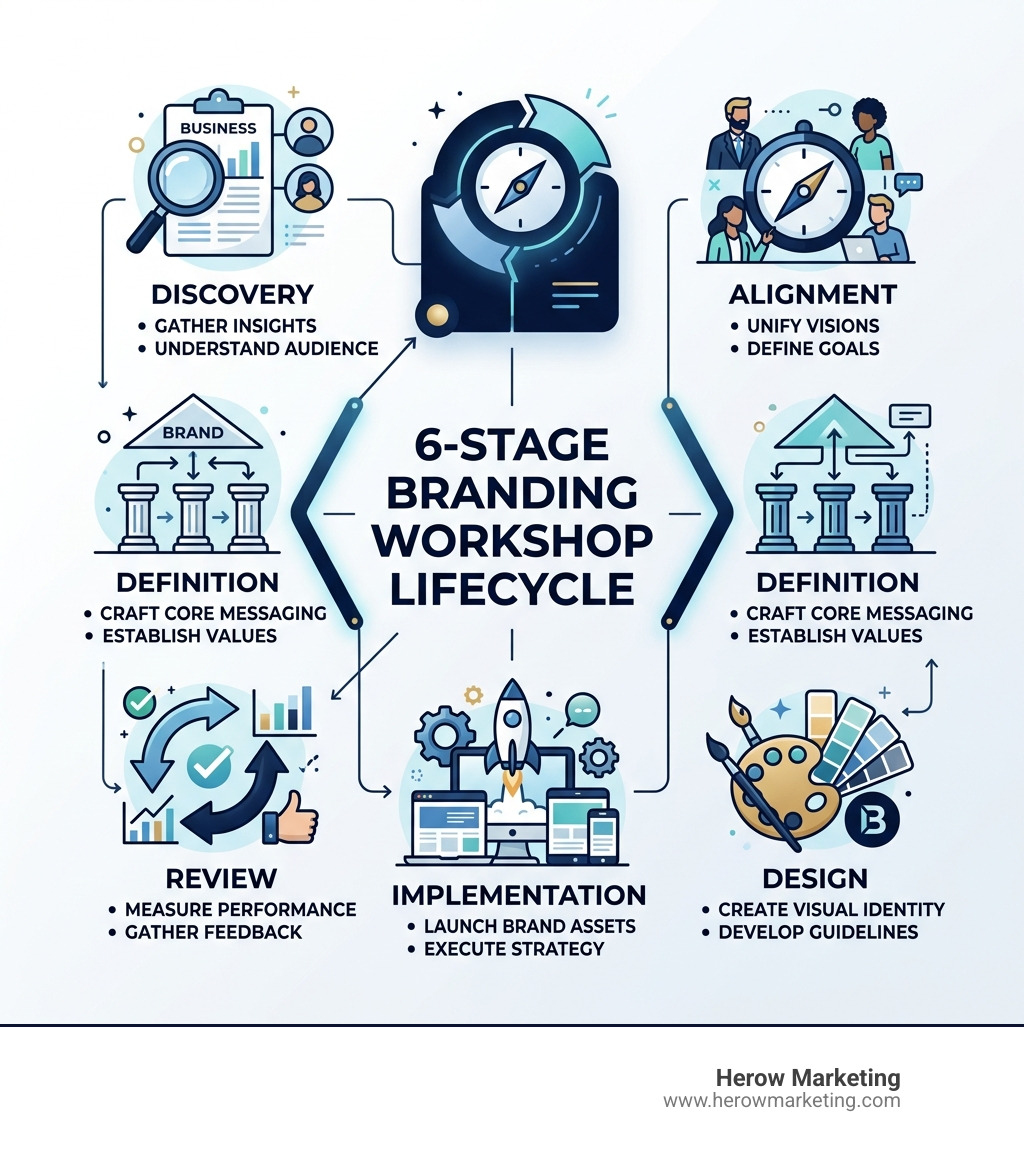
A great workshop follows a narrative arc: Discovery, Alignment, and Definition. You start wide with big ideas and slowly funnel them down into actionable strategy.
| Tool Type | In-Person | Remote (Digital) |
|---|---|---|
| Brainstorming | Post-it Notes & Sharpies | Miro or FigJam boards |
| Voting | Dot Stickers | Digital “Thumb” icons |
| Timer | Physical Kitchen Timer | Built-in App Timers |
| Documentation | Phone Photos of Boards | Exported PDF/Image files |
We often start with a “3-hour brand sprint” for teams that need to move fast. This is a condensed version of the process that focuses on the essentials: values, audience, and personality. For those just starting out, check out The Best Branding Services for Beginners to see how these fundamentals fit into the larger marketing picture.
Effective Exercises for Branding Workshop Sessions
To get the most out of your branding workshop sessions, you need exercises that bypass the “logical” brain and tap into the “emotional” one.
1. Brand Archetypes We use a set of 12 universal archetypes (like The Hero, The Outlaw, or The Sage) to define your brand’s character. If you’re a law firm, are you “The Ruler” (authoritative, stable) or “The Magician” (transformative, visionary)? Defining this helps your team understand how the brand should “act” in the wild.
2. The “This-Not-That” Matrix This is a favorite at Herow Marketing. We create a list of adjectives and force the team to choose.
- Are we Modern but not Futuristic?
- Are we Professional but not Stiff?
- Are we Friendly but not Goofy? This exercise creates the “guardrails” for your brand voice.
3. The Bouba/Kiki Effect This is a fascinating bit of linguistics. When shown a jagged shape and a rounded shape, 95% of people associate the word “Kiki” with the sharp one and “Bouba” with the round one. We use this to test name ideas and visual directions. Sharp, angular sounds evoke tech and precision; round, soft sounds evoke comfort and sustainability.
4. The Funeral Eulogy It sounds dark, but it’s incredibly effective. Imagine your company has gone out of business. What would you want your customers to say about you at the “funeral”? This forces the team to think about the long-term impact and legacy of the brand, rather than just next month’s sales targets.
5. The 20-Year Roadmap Where is the brand in 5, 10, and 20 years? This prevents “short-termism” and ensures the strategy you build today can scale with your ambition.
Mastering Facilitation and Avoiding Common Pitfalls
Facilitation is an art form. You aren’t just a timekeeper; you’re a referee and a therapist. A challenge is the HiPPO effect—the Highest Paid Person’s Opinion. When the CEO speaks first, everyone else tends to nod in agreement, even if they have a better idea.
The “Note & Vote” Technique
To combat the HiPPO effect, use “Note & Vote.”
- Ask a question.
- Everyone writes their answer silently on a sticky note.
- Everyone sticks them on the wall at once.
- The group votes on the best ideas anonymously using dot stickers. This democratizes the process and ensures the best idea wins, not the loudest voice.
Managing Egos and Tangents
As we explore in Why Every Brand Graphic Designer Secretly Wants to Be Your Hero, designers and stakeholders often have different priorities. A facilitator keeps the peace.
- The Parking Lot: When someone brings up a topic that is important but off-task (like “What should our business cards look like?”), put it in the “Parking Lot”—a dedicated space on the whiteboard to revisit later.
- Psychological Safety: Ensure everyone feels safe to share “bad” ideas. Some of the best brand breakthroughs come from a “stupid” suggestion that sparked a brilliant one.
- Avoid “Change for Change’s Sake”: Always tie decisions back to the data and the “Why.” Don’t rebrand just because the CEO is bored with the current logo.
Deliverables and Long-Term Implementation
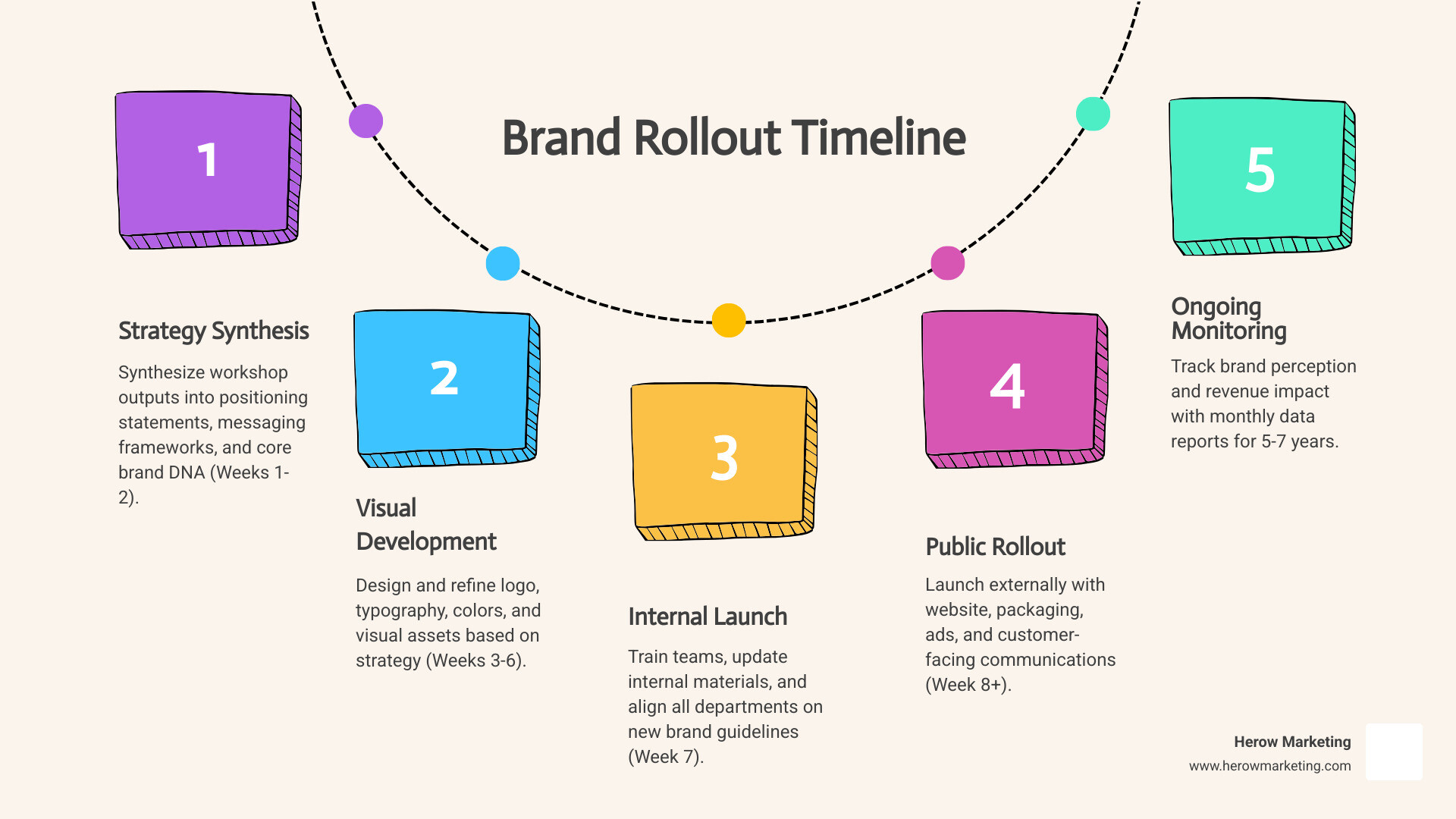
A workshop without a follow-up is just a fun day of coloring. The real work happens after the sticky notes are taken down.
The Cost of Inconsistency
Consider the infamous Tropicana redesign of 2009. They changed their packaging to something “cleaner” and “more modern,” but they lost their “distinctive assets” (the orange with the straw). The result? An estimated $30 million loss in sales in just two months. Consistency isn’t just a design preference; it’s a financial imperative. Research shows that maintaining a consistent brand presentation can boost revenue by up to 23%.
Key Outputs
Your branding workshop sessions should result in a “Brand Strategy Document” or “Brand Bible.” This includes:
- Positioning Statement: A clear 1-2 sentence summary of who you are, who you serve, and why you’re different.
- Messaging Framework: The key pillars of how you talk to different audiences.
- Brand Style Guide: The visual rules—logo usage, typography, and color codes. You can see examples of how this comes to life in our Portfolio – Brand Identity.
The Long Game
Brand distinctive assets require consistent exposure over 5 to 7 years to achieve reliable consumer recognition. You can’t change your look every year and expect people to remember you. After the workshop, we recommend monthly data reports to monitor how the new brand is being perceived and ensure it’s driving measurable growth.
Frequently Asked Questions about Branding Workshops
How much does a professional branding workshop cost?
The investment varies significantly based on the scale of your business and the depth of the session.
- Freelance Facilitators: Typically range from $1,500 to $5,000 for a single session and synthesis.
- Full-Service Agencies: Can range from $10,000 to $25,000+ for a deep-dive strategic engagement that includes research, competitive analysis, and full visual identity development.
While the price tag might seem high, most businesses recoup the full cost of a serious branding engagement within a single quarter through increased sales efficiency and higher pricing power.
When should we hire an external facilitator?
While you can run a workshop internally, there are three times when an external pro is non-negotiable:
- Lack of Objectivity: If your team is too “close” to the product, you’ll miss the obvious blind spots that a customer sees.
- Internal Conflict: If there are strong disagreements between founders or departments, an external facilitator acts as an unbiased third party to navigate the tension.
- Specialized Needs: If you are navigating a complex merger or need high-level naming expertise that carries legal and SEO weight.
Can branding workshops be run effectively for remote teams?
Absolutely. In fact, in 2026, many of the best sessions are hybrid. The key is to avoid “Zoom Drain.”
- Use 90-Minute Sprints: Don’t try to do 6 hours straight on video. Break it into 90-minute blocks with long breaks.
- Digital Tools: Use Miro or FigJam. These tools allow everyone to move “digital sticky notes” in real-time, which keeps engagement high.
- Documentation: Digital workshops have the benefit of being “pre-documented.” You don’t have to spend hours typing up messy handwriting from a whiteboard.
Conclusion
At Herow Marketing, we believe that a brand is a promise kept. Branding workshop sessions are how you define exactly what that promise is. By combining our time-tested strategic playbook with full transparency and data-driven insights, we help businesses in Bethlehem, PA and beyond stop being bland and start being iconic.
Whether you are looking to refresh your look or build a brand from scratch, the process starts with a conversation. We invite you to explore our work in our Portfolio Category – Branding to see the measurable growth we’ve driven for our partners.
Ready to transform your brand? Explore our Social Media and Branding Services and let’s start building your hero story today.