

Every Starbucks Logo Ever Made and Why They Changed
What All Starbucks Logos Look Like — and Why They Changed
All Starbucks logos share one thing in common: the iconic twin-tailed siren. But the way she looks has changed dramatically since 1971.
Here’s a quick overview of every major Starbucks logo:
| Year | Color | Key Change |
|---|---|---|
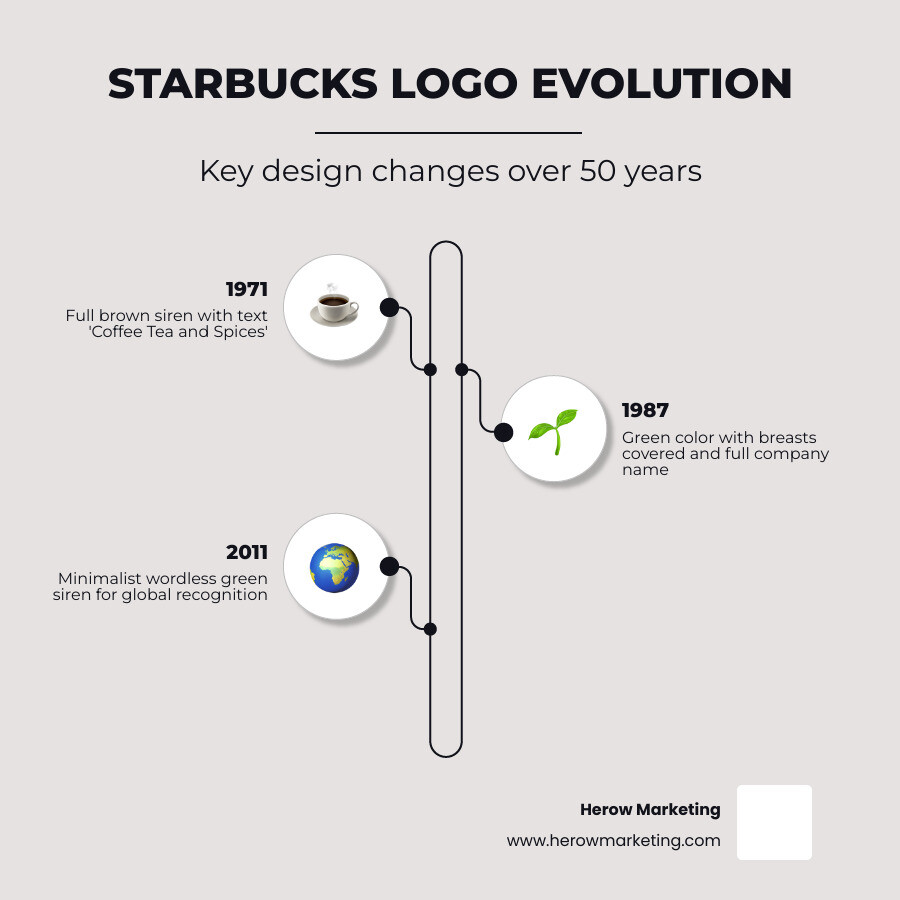
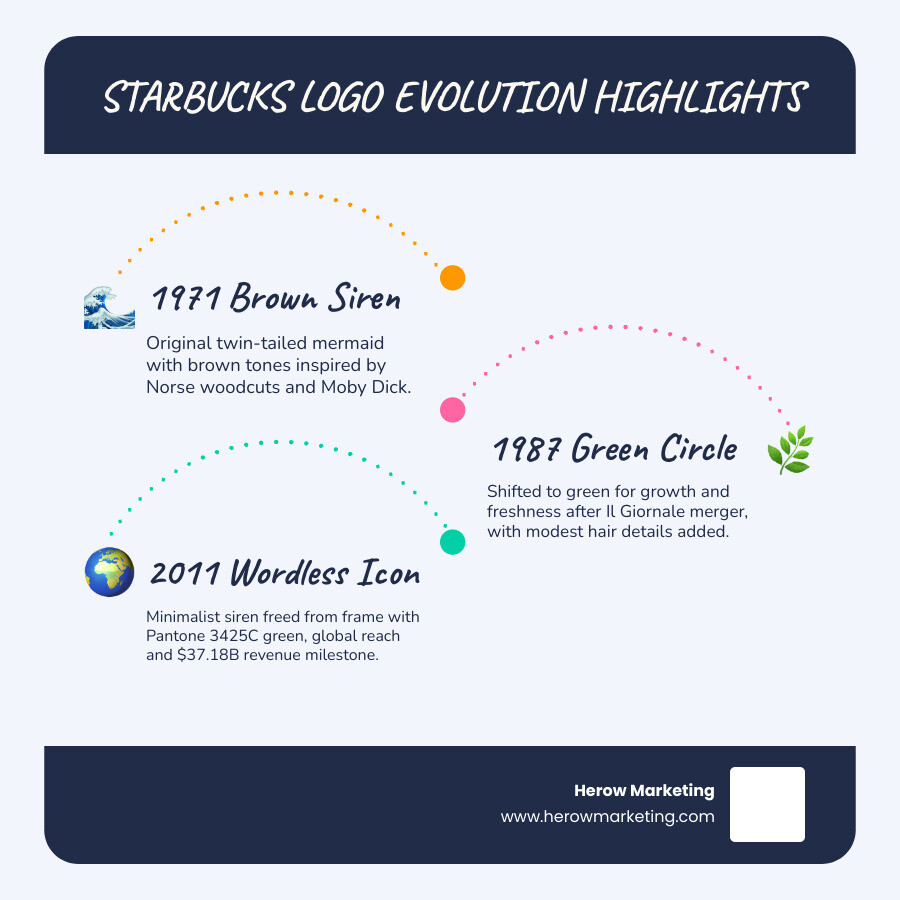
| 1971 | Brown | Full-bodied topless siren; words “Coffee, Tea and Spices” |
| 1987 | Green | Siren cropped closer; breasts covered by hair; “Starbucks Coffee” text |
| 1992 | Green | Zoomed in to face and crown; navel removed; sharper typography |
| 2011 | Green | Company name removed entirely; siren stands alone |
Starbucks has gone through four major logo redesigns in over 50 years — each one simpler than the last. Today, the green siren is recognized in 87 countries across more than 40,990 stores, without a single word of text.
That kind of brand recognition doesn’t happen by accident. It’s the result of deliberate, strategic design decisions made decade after decade.
I’m Gianna Heron — with a background spanning creative direction, brand strategy, and business growth, I’ve spent years studying how visual identity shapes the way consumers connect with brands like all Starbucks logos have done so powerfully. Understanding this evolution is one of the clearest case studies in what intentional branding can do for a business at any size.
Key all starbucks logos vocabulary:
The Origin Story: 1971 and the Brown Siren
When Jerry Baldwin, Zev Siegl, and Gordon Bowker opened the first Starbucks in Seattle’s Pike Place Market in 1971, they weren’t selling lattes. They were selling high-quality roasted coffee beans, tea, and spices. To represent this new venture, they looked to the city’s maritime history and the seafaring tradition of the coffee trade.
The founders wanted a name that evoked the romance of the high seas. While they briefly considered “Pequod” (the ship from Herman Melville’s Moby-Dick), they eventually settled on the name of the ship’s first mate: Starbuck.
To create the visual identity, they turned to designer Terry Heckler. Heckler scoured old marine books and discovered a 16th-century Norse woodcut of a twin-tailed siren. In mythology, sirens were known for luring sailors with their enchanting music and voices. The founders felt this was a perfect metaphor for the allure of their dark-roasted coffee.
The original 1971 logo was quite different from what we see today:
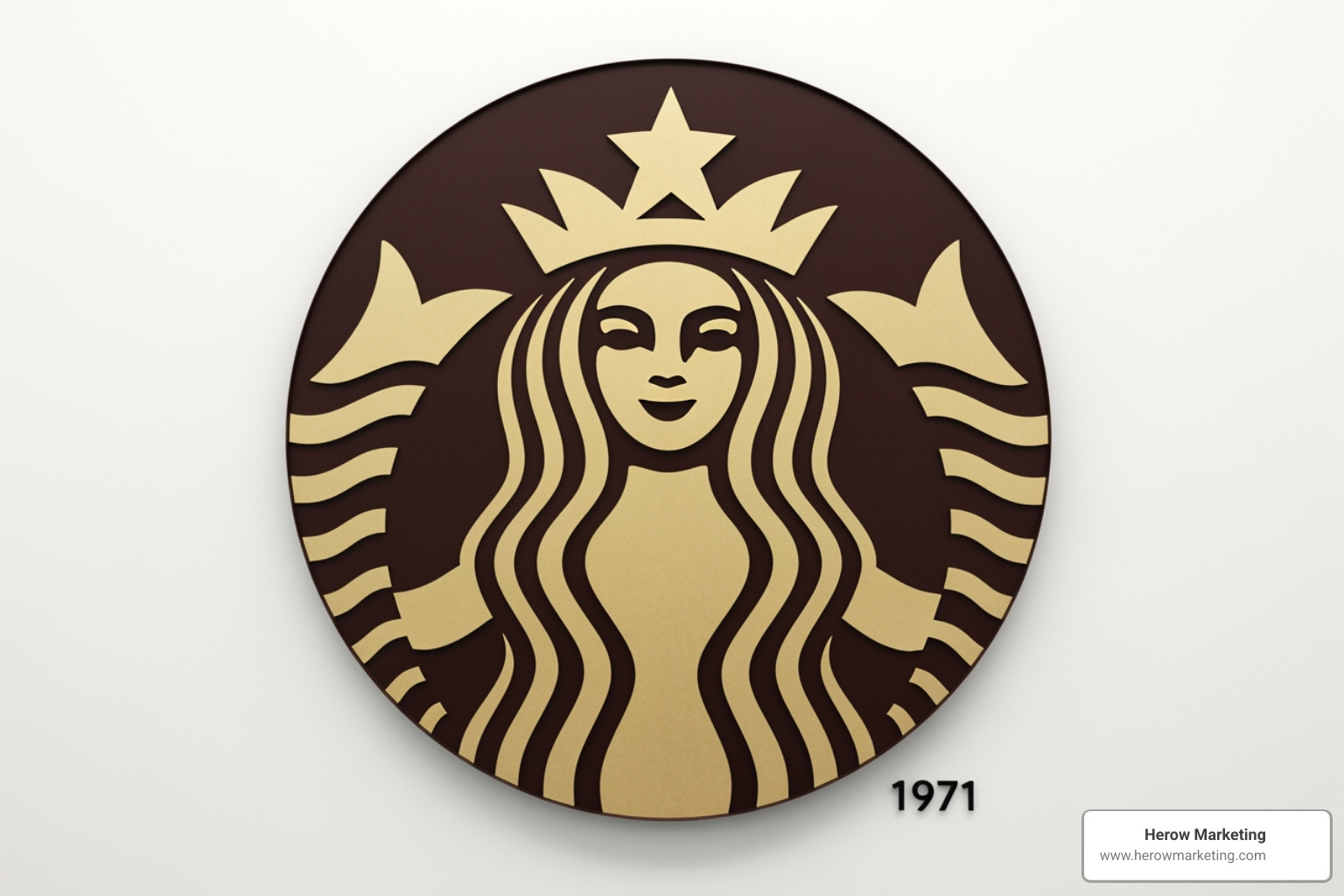
- Color: It was a deep tobacco brown, intended to stimulate appetite and reflect the color of roasted beans.
- Detail: The siren was shown in full, including her bare chest and the intricate scales of her two tails.
- Text: A circular band surrounded the siren with the words “Starbucks Coffee, Tea, and Spices.”
As noted in the Starbucks History Archive, this detailed, earthy emblem set the stage for a brand that was deeply rooted in tradition and the “seductive” quality of a premium product.
Why the Original Design Stands Out Among All Starbucks Logos
The 1971 design is a favorite among coffee purists. It captured a specific sense of place—Puget Sound—and a specific moment in coffee history when the “second wave” of coffee was just beginning. Most Americans at the time were drinking low-quality coffee from cans; Starbucks wanted to “lure” them into a more sophisticated experience.
This original version reminds us that branding strategies for startups are often about establishing a clear, unique personality. While the nudity in the original woodcut might seem “NSFW” by today’s corporate standards, in 1971, it was an authentic nod to historical art and maritime folklore.
The Evolution of All Starbucks Logos: 1987 to 1992
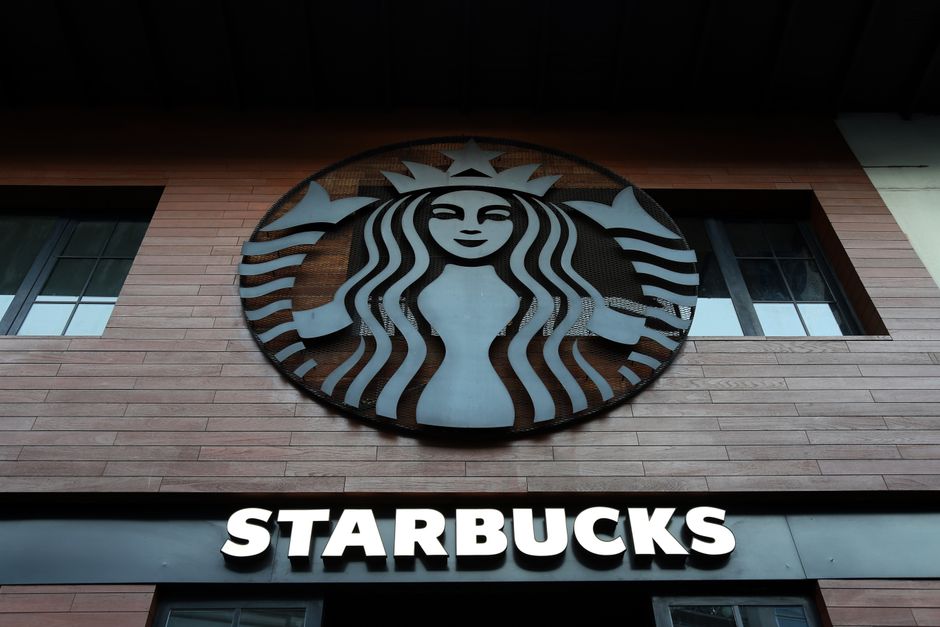
The biggest turning point for all Starbucks logos came in 1987. Howard Schultz, who had left the company to start his own espresso bar called Il Giornale, returned to purchase Starbucks with the help of local investors.
Schultz wanted to merge the two identities. He brought the Italian espresso bar concept to the Seattle bean roaster, and the logo had to reflect this new, more energetic direction. This was the moment the famous “Starbucks Green” was born. The color was inspired by the Il Giornale logo and was chosen to represent growth, freshness, and prosperity.
The 1987 redesign made several significant functional changes:
- Modesty Adjustments: To make the brand more palatable for a national audience (and to look better on delivery trucks), the siren’s long hair was rearranged to cover her breasts.
- Streamlined Text: The words “Tea and Spices” were dropped, leaving only “Starbucks Coffee.”
- Graphic Style: The hand-drawn, woodcut feel was replaced by cleaner, more symmetrical lines.
We often see similar shifts in our portfolio branding examples, where a brand matures from a niche local shop into a scalable corporate identity.
| Feature | 1971 Design | 1987 Design |
|---|---|---|
| Primary Color | Brown | Green |
| Siren Appearance | Full body, bare-breasted | Cropped, hair-covered |
| Shape | Circular Emblem | Circular Emblem |
| Text Content | Coffee, Tea, Spices | Starbucks Coffee |
The 1992 Update: Focusing on the Face
By 1992, Starbucks was a public company and growing at an explosive rate. Between 1987 and 1992, the store count jumped from 17 to 165. To celebrate this growth, the logo received a “zoom-in.”
The siren was cropped even closer, showing only her upper body. This change removed her navel from view and focused the customer’s eye on her face and crown. The typography was also sharpened, using a more modern font. This version of the logo is so iconic that it is still used today as a secondary mark in certain contexts, as documented by Starbucks Creative Expression.
If you are looking for that level of professional polish, finding the best logo designer on Fiverr can help you achieve a similarly “zoomed-in” focus for your own brand.
The 2011 Minimalist Revolution: Removing the Name
In 2011, to celebrate the company’s 40th anniversary, Starbucks took a bold leap that few brands dare to attempt: they removed their name from the logo entirely.
This move was part of a larger trend toward minimalism, but it was also a strategic business decision. By removing the word “Coffee,” Starbucks signaled that they were moving beyond just one product. They were now a global lifestyle brand selling food, juice, and merchandise.
The 2011 redesign, which won the Brand New Award that year, featured:
- The Siren Unlocked: The siren was freed from her circular “frame.”
- Monochromatic Palette: The black background was removed, leaving only the “Starbucks Green” (Pantone 3425C) and white.
- Global Versatility: Removing the English text eliminated language barriers, making the logo instantly recognizable from Bethlehem, PA, to Beijing.
This level of confidence in a symbol is rare. It shows why every brand graphic designer wants to be your hero; they strive to create an icon so powerful it doesn’t need a name tag. With 2025 revenue reaching $37.18 billion, it’s clear the minimalist approach didn’t hurt their bottom line.
Hidden Details in the Modern Starbucks Logo
At first glance, the current logo looks perfectly symmetrical. However, the design team at Lippincott (who worked with Starbucks on the 2011 update) realized that perfect mathematical symmetry made the siren look “creepy” and robotic—like a cold mask.
To make her feel more human and “knowing,” they introduced a subtle asymmetry. If you look closely at her face:
- The shadow on the right side of her nose is slightly longer than the left.
- The eyes and nose don’t perfectly align.
These tiny “imperfections” give the siren a more mysterious, Mona Lisa-like smile. For those just starting out, the best branding services for beginners often emphasize these “human” touches that create a deeper emotional connection.
Branding Lessons from the Starbucks Siren
What can we learn from the history of all Starbucks logos?
- Consistency is King: Despite four major changes, the siren has remained the “muse” of the brand for over 50 years.
- Evolution, Not Revolution: Starbucks didn’t wake up one day and decide to be a green circle. They gradually simplified their look as their brand equity grew.
- Listen to the Audience: In 2008, Starbucks tried to bring back the original 1971 brown logo for an anniversary promotion (and the Pike Place Roast). Customers actually pushed back; they had become so emotionally attached to the green identity that the brown version felt “wrong.”
- Simplicity Scales: The current wordless logo works just as well on a tiny mobile app icon as it does on a massive storefront in one of the 87 countries where they operate.
At Herow Marketing, we provide professional branding services that follow these same principles. Whether you are in Bethlehem or operating globally, your logo needs to be flexible enough to grow with you while remaining anchored in your core story.
Frequently Asked Questions about All Starbucks Logos
Why did Starbucks change from brown to green?
The change happened in 1987 when Howard Schultz bought the company. He merged Starbucks with his own coffee chain, Il Giornale, which used a bright green logo. The green color symbolized a new era of growth, freshness, and the Italian espresso bar experience.
Is the Starbucks logo a mermaid or a siren?
Technically, she is a siren or a melusine. While mermaids usually have one tail, the Starbucks mascot has two. In medieval folklore, a twin-tailed siren was considered “twice as tempting,” which the founders felt was a perfect metaphor for the addictive nature of good coffee.
Why was the company name removed in 2011?
Starbucks removed the text because the siren had become one of the most recognizable icons in the world. Removing the words “Starbucks Coffee” allowed the company to expand into other products (like food and tea) without being pigeonholed as “just a coffee shop.” It also created a cleaner, more modern look for digital platforms.
Conclusion
The evolution of all Starbucks logos is a masterclass in brand maturity. From the detailed, earthy brown woodcut of 1971 to the sleek, wordless green icon of today, Starbucks has shown that a brand must evolve to stay relevant without losing its soul.
At Herow Marketing, we help businesses find their own “Siren”—that core identity that resonates with customers and stands the test of time. Using our time-tested strategic playbook and a commitment to full data transparency, we help you drive measurable growth through smart design and SEO.
Ready to elevate your brand identity? Whether you need a complete redesign or a strategy to scale, our team is here to help you make your mark.